Week1 Blog
Since the direction of week 1 failed and subsequent developments did not follow that direction, you can skip to the week 1 summary reading.
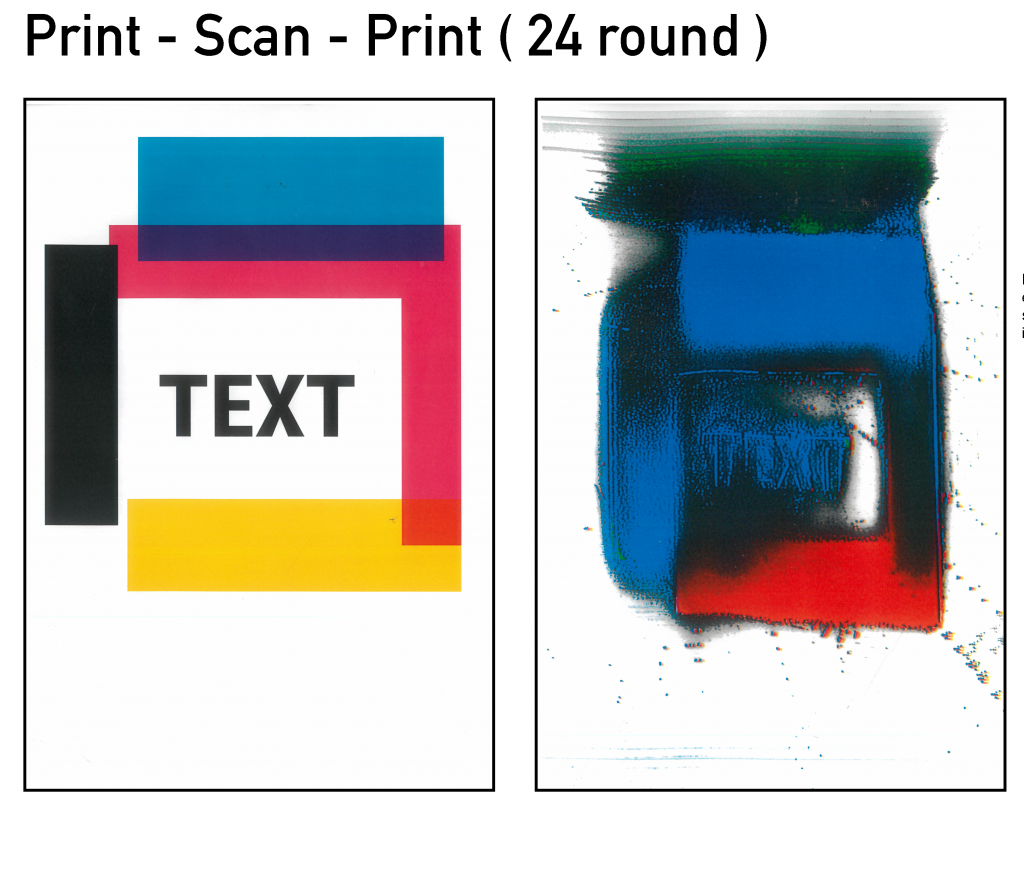
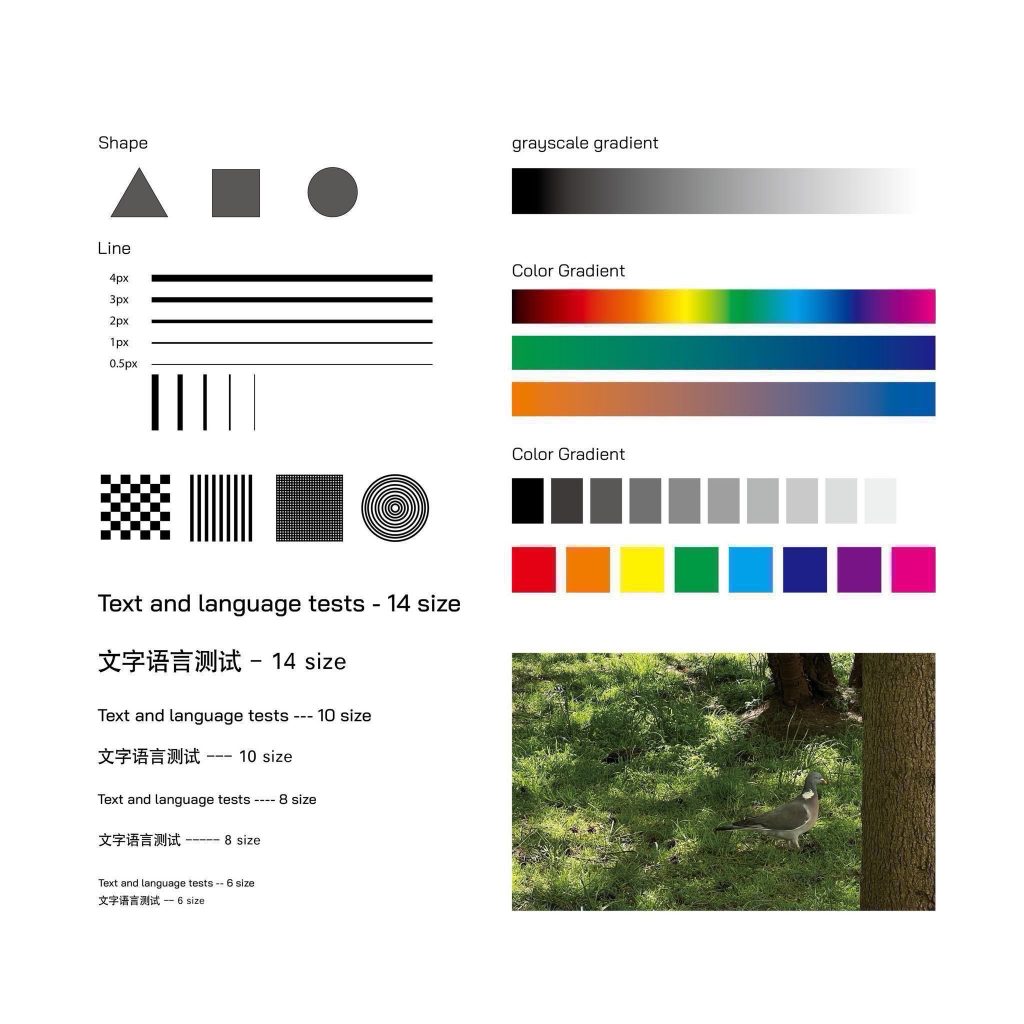
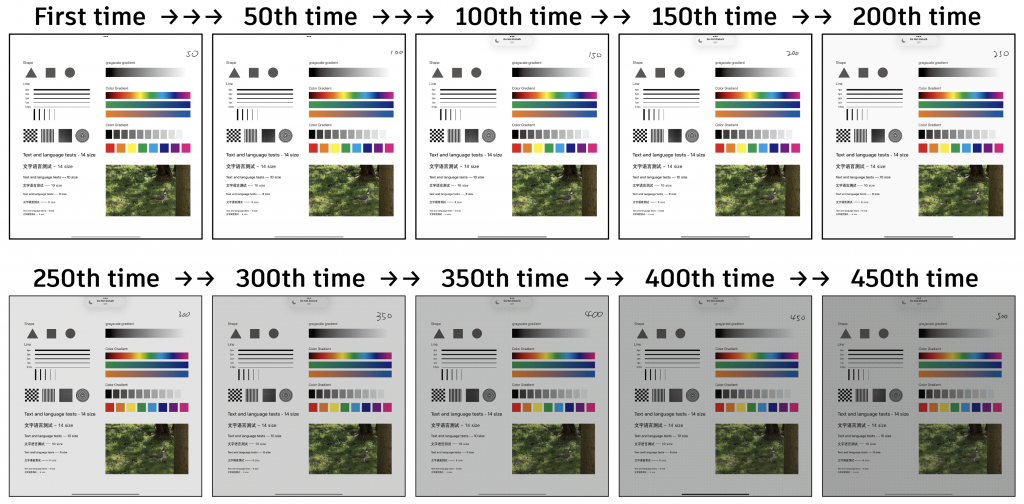
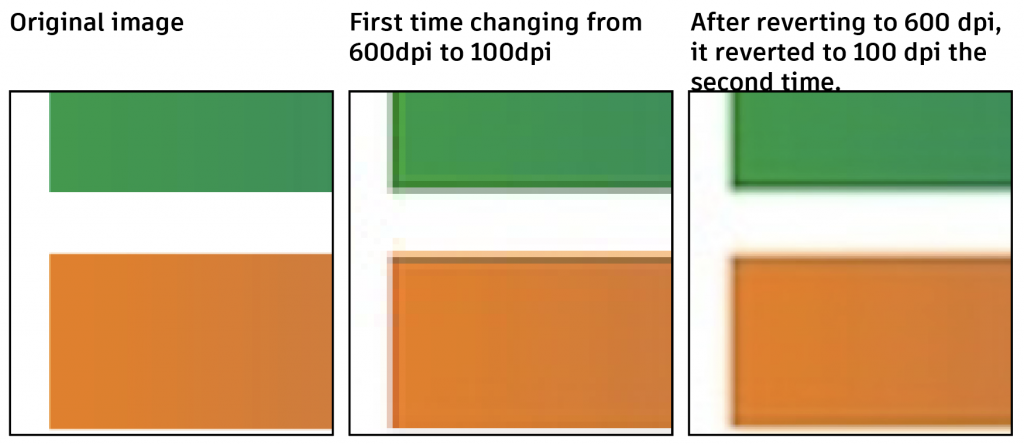
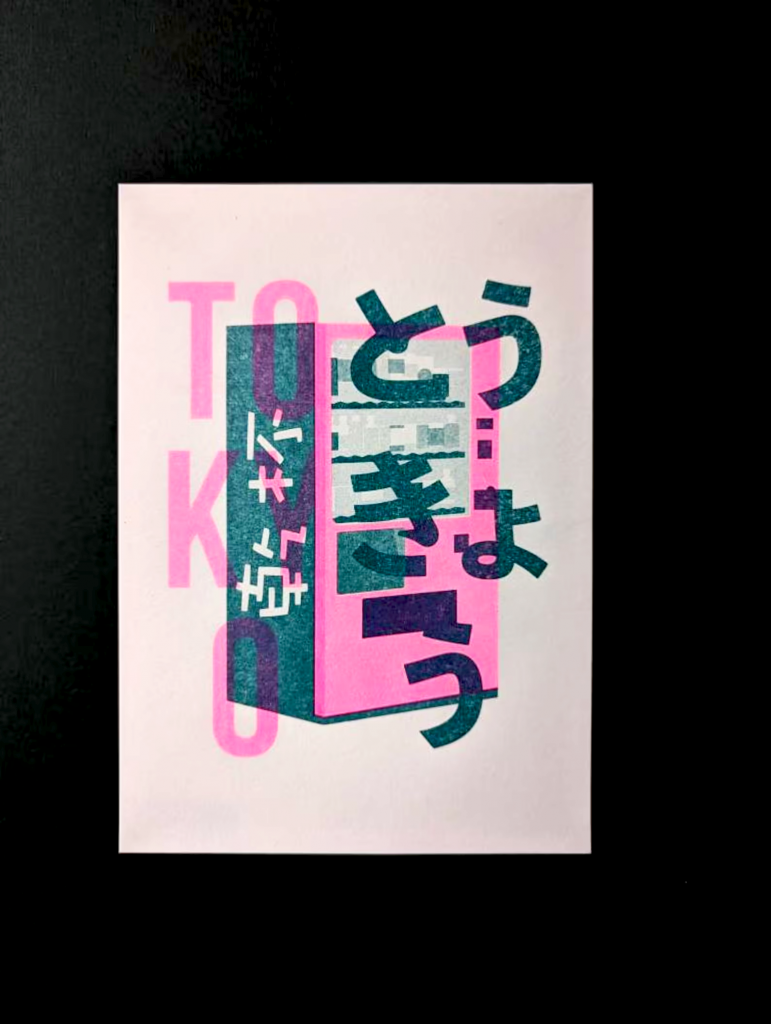
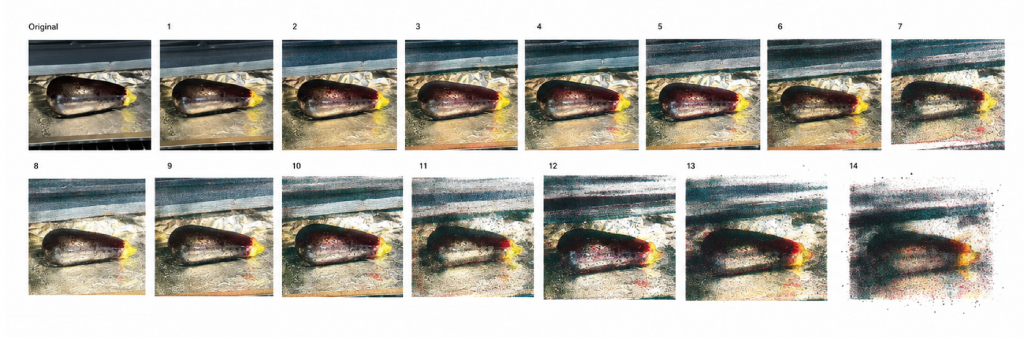
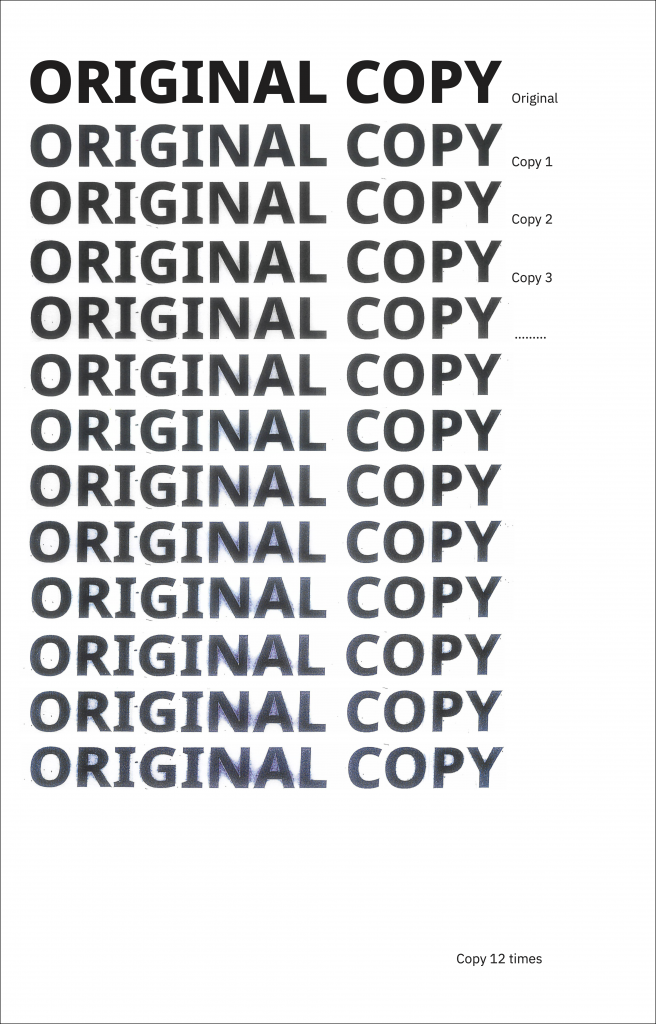
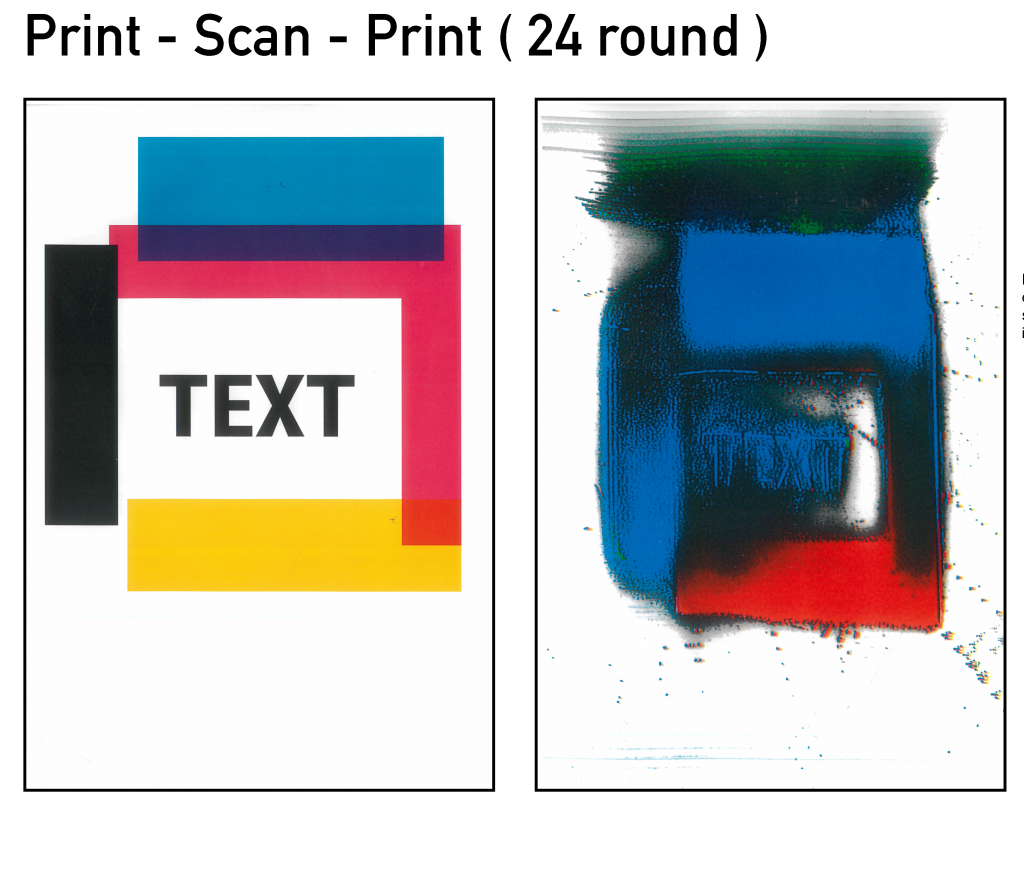
In the “Positions through iterating” project, I investigated how errors are generated between the laser printer and the scanner. This is the result of one of the experiments, where the image was shuttled between scanning and printing 24 times.
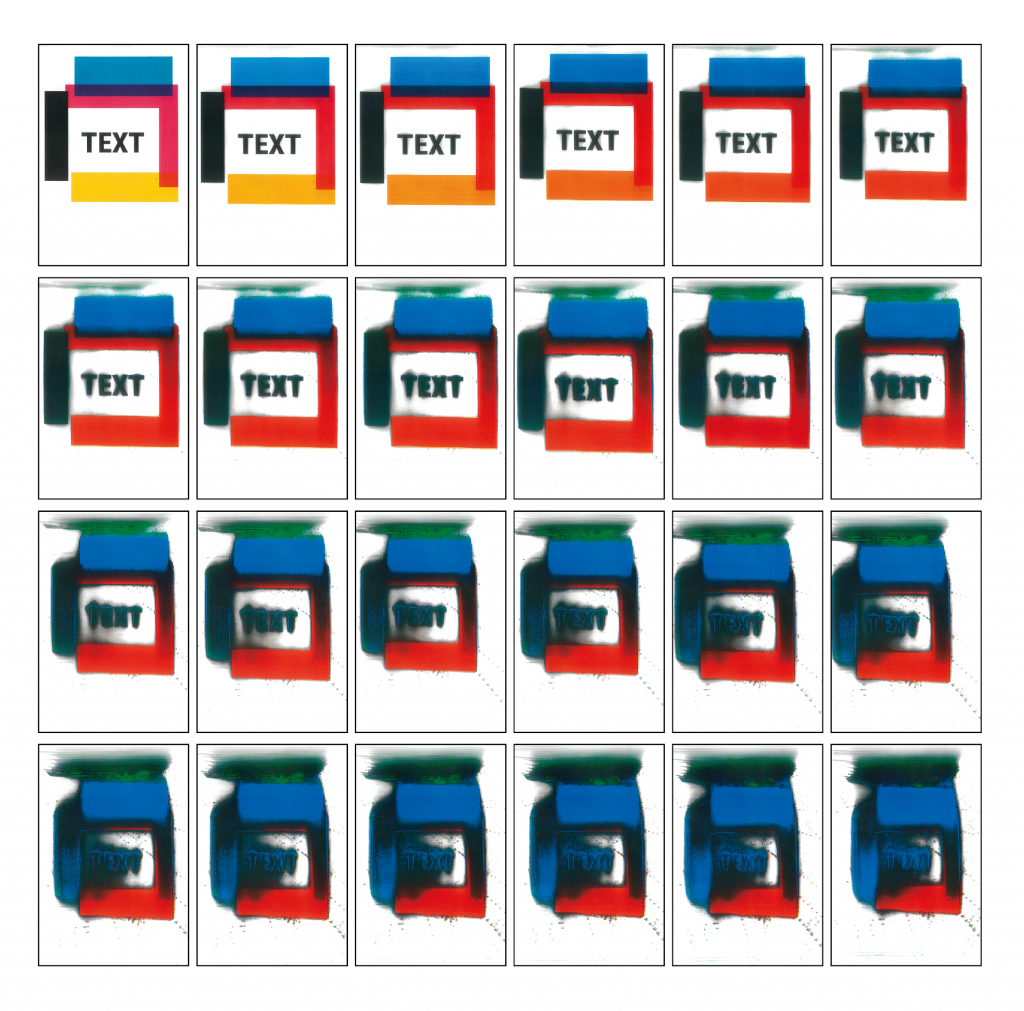
This is the process of changing the original image 24 times through the scanning and printing process.
I want to know if AI, being a machine, can understand the processes of scanners, computers, and printers, and use programming to replicate the iterative effects.
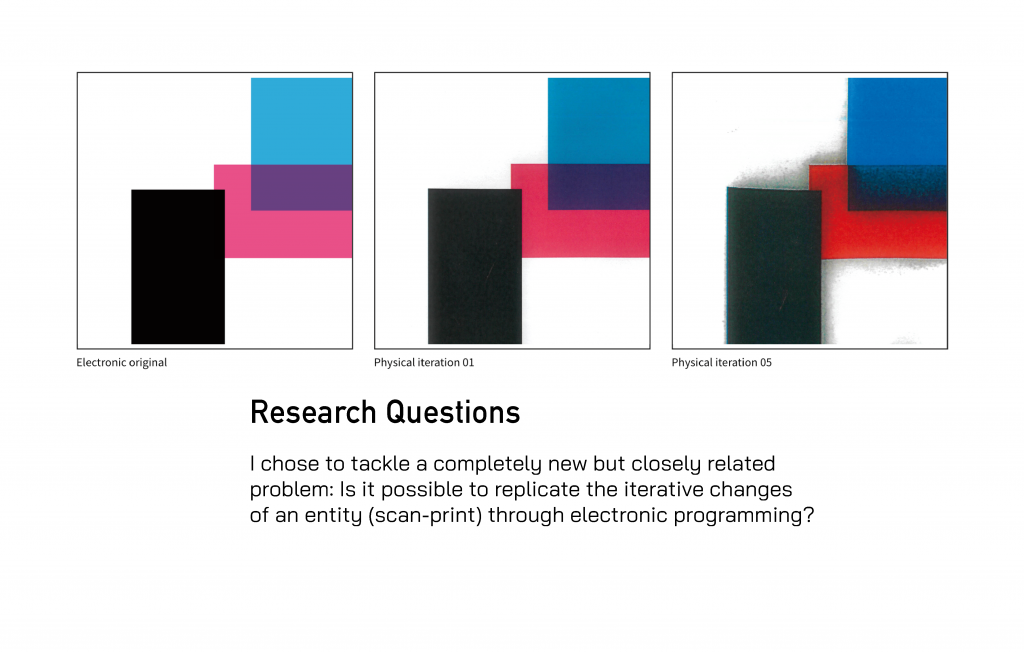
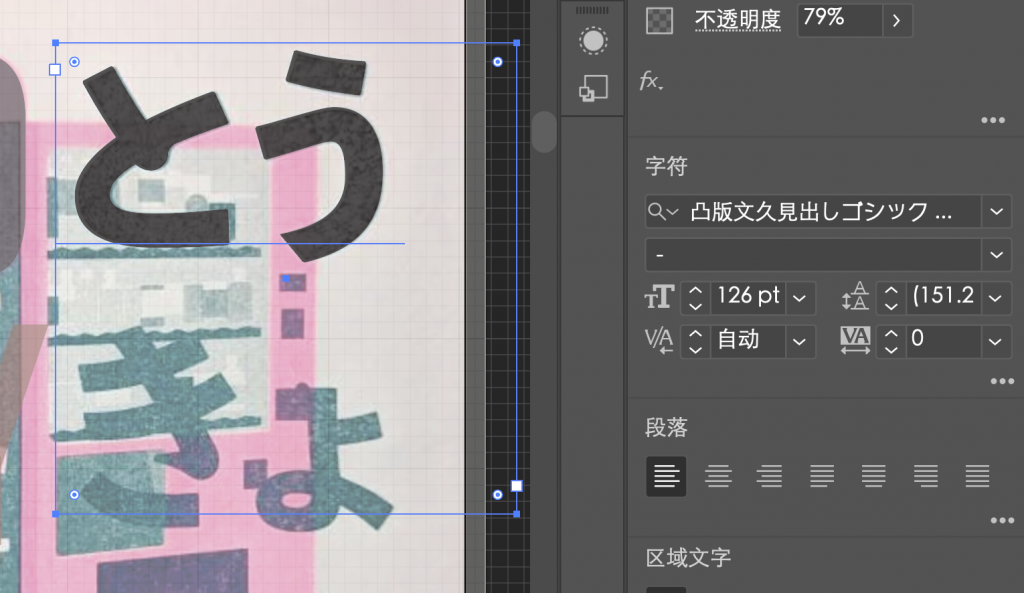
I first had the AI build a basic website framework. Unnecessary parts were then removed via commands. Because my focus was on how to generate iterative effects from images using the computer, I didn’t delve too deeply into the web design itself.
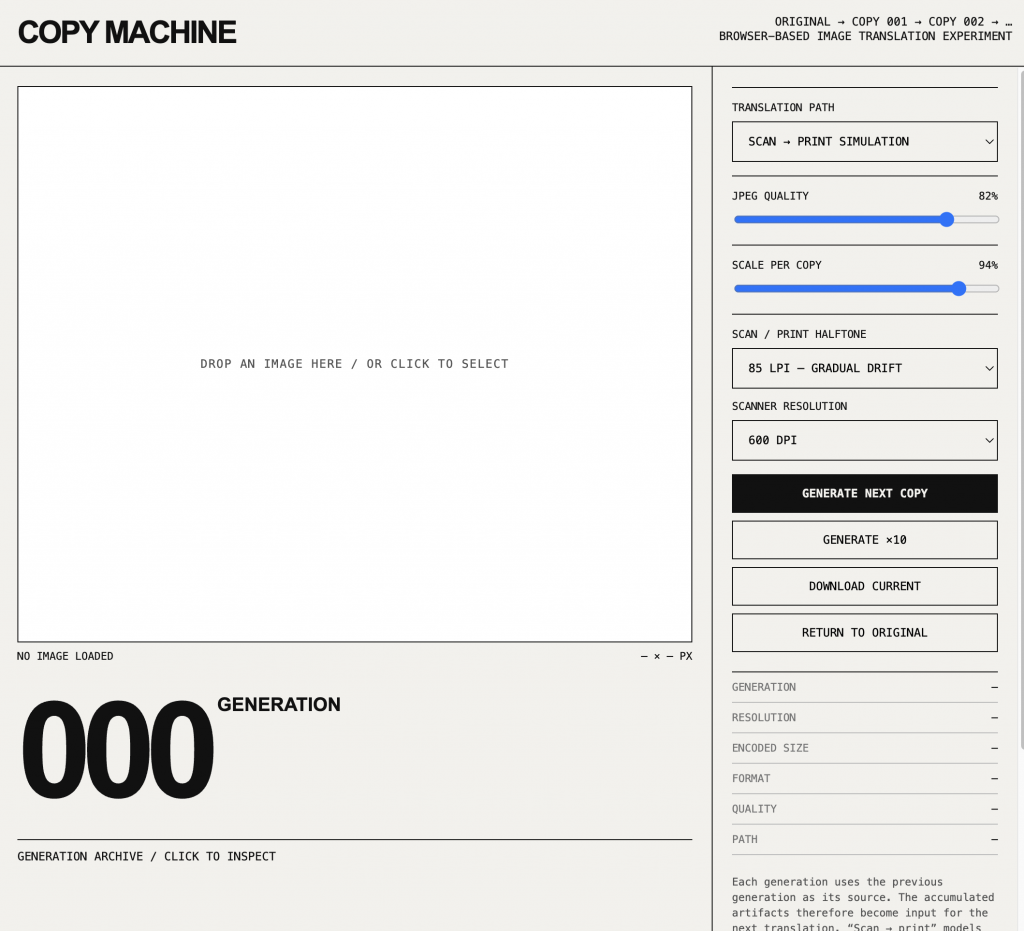
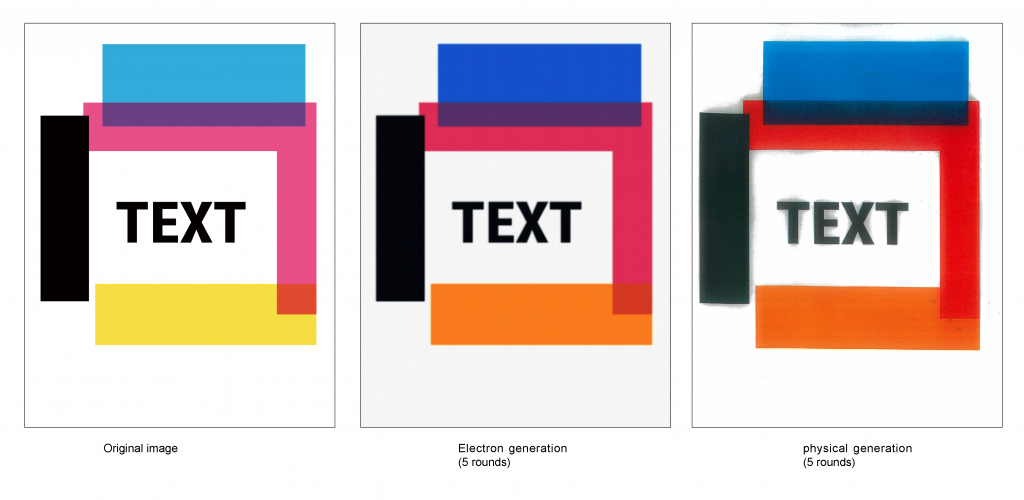
This is the first time I’ve used the effect generated by the website. The image has turned gray and has been blurred overall.
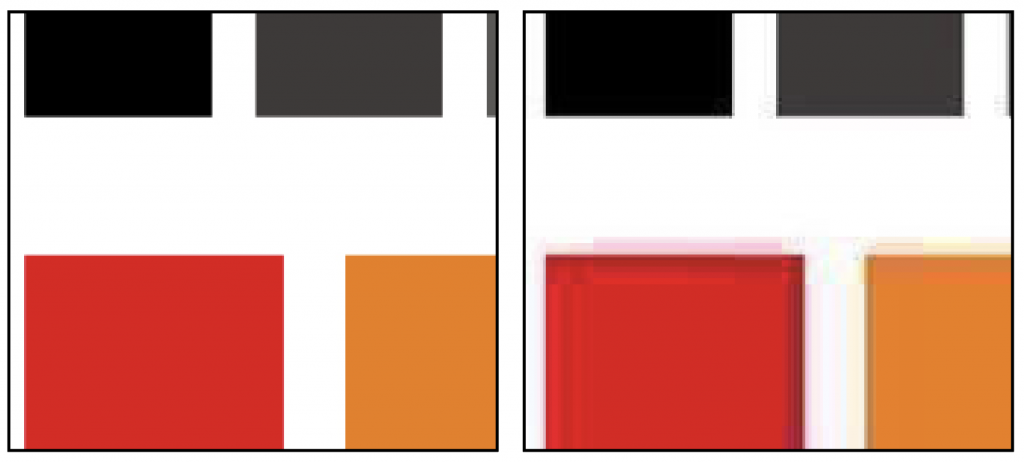
However, the fusion in reality is not a complete blurring. Rather, after the overall hue changes, the colors diffuse outwards according to certain rules.
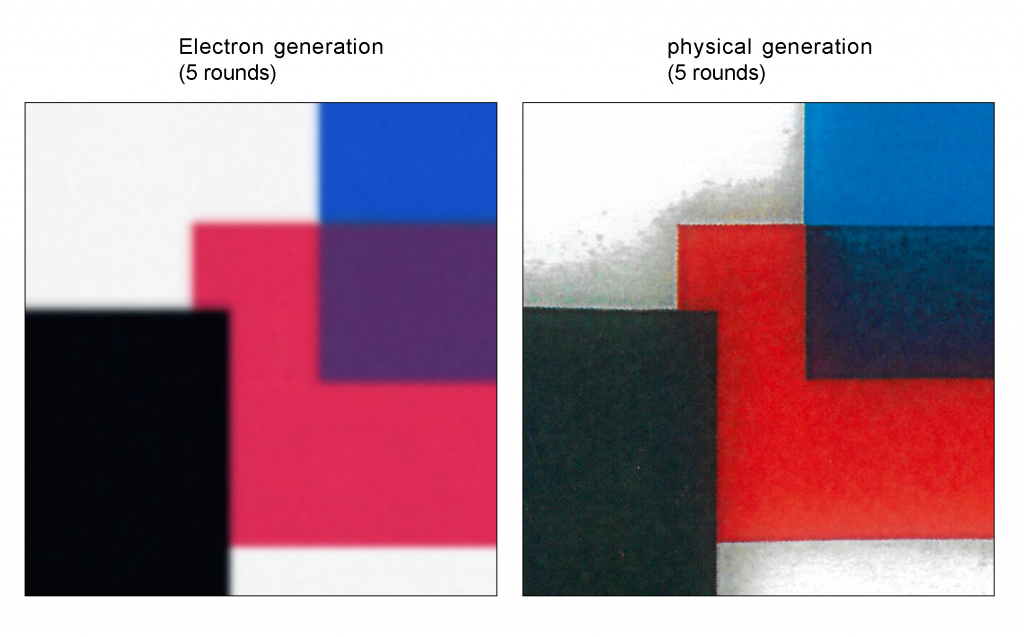
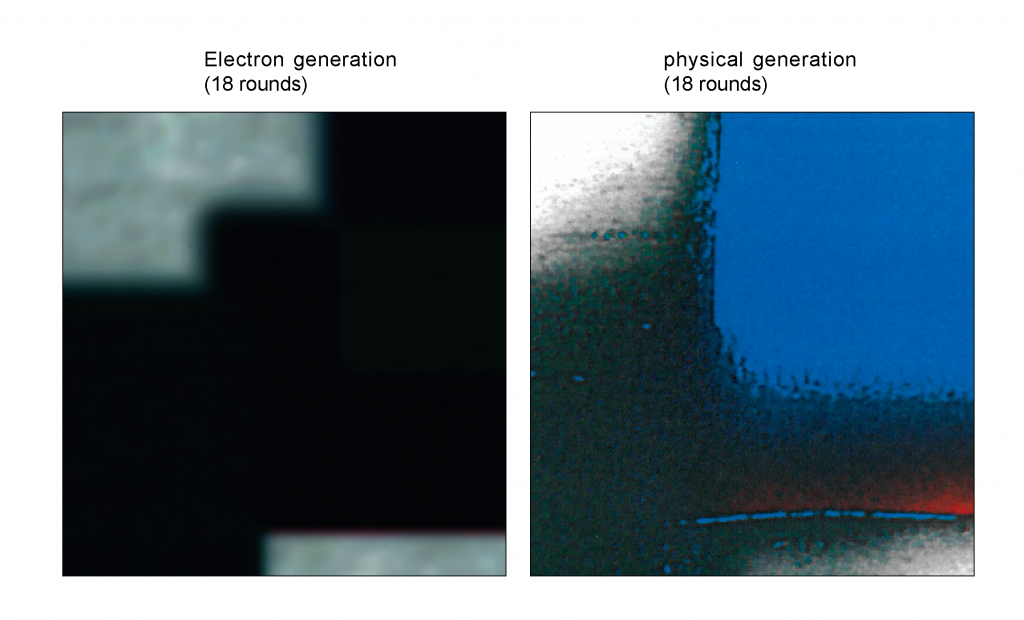
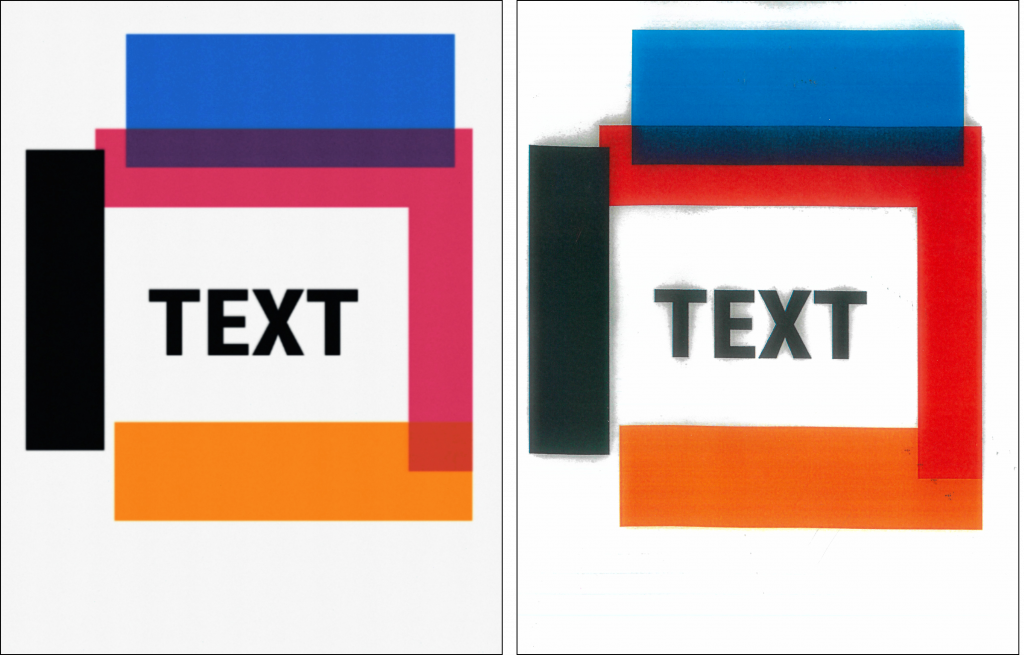
I tried providing more instructions: removing the overall blur, adding hue changes, inI gave them more instructions: remove the overall blur, add hue changes, enhance internal color blending, and increase exposure. However, the effect was still limited; while the colors were closer to the original image, the most important changes were still missing.
I tried breaking down my physical printing process and having AI simulate some elements of that process, requiring entirely new programming.
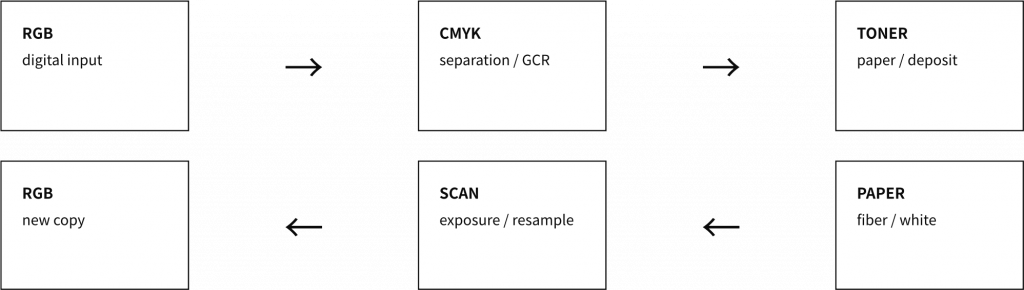
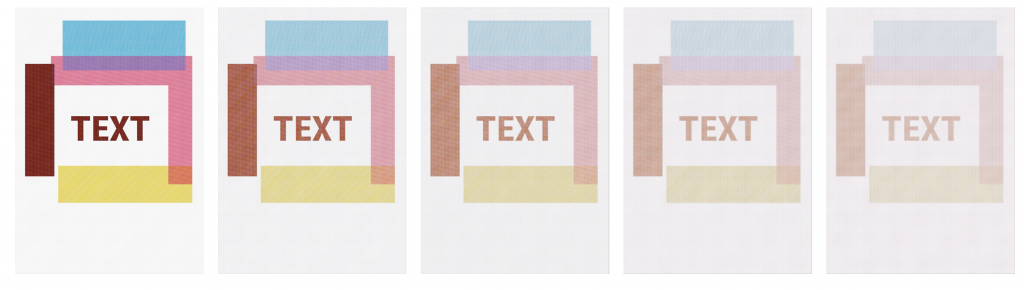
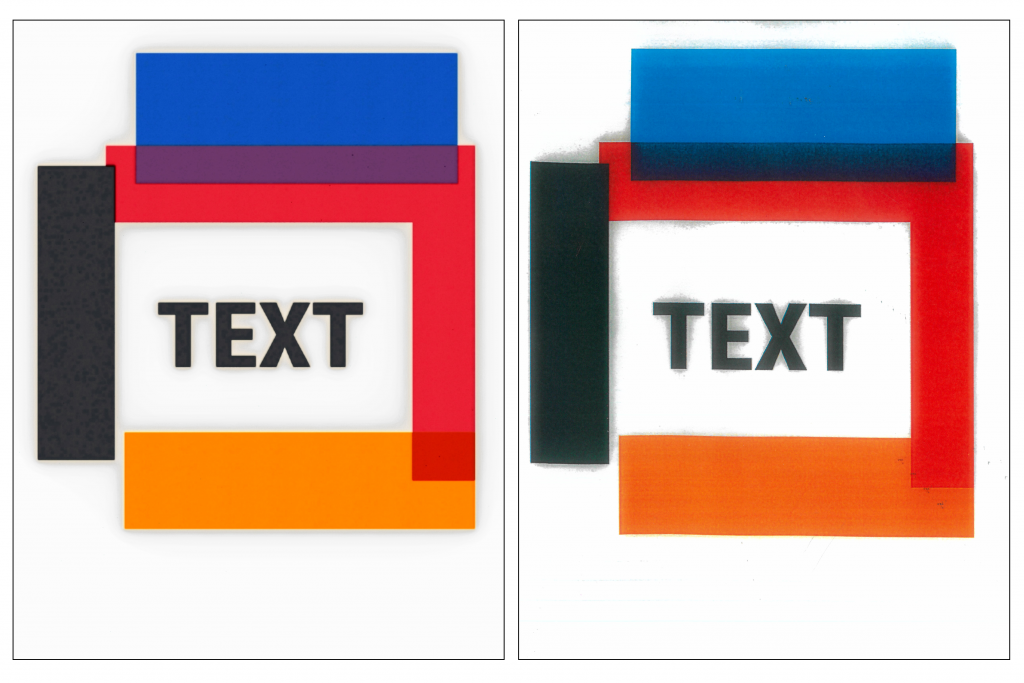
However, the test results were still incorrect. So I tried to break these processes down and then import them back into the original program for testing.
Meanwhile, instead of using website programming for iteration, I tried generating the data directly with AI, but perhaps due to insufficient data, the AI was unable to calculate the final effect after the iteration.
Summary
Therefore, I believe that reproduction is the process by which a medium analyzes the original work using its inherent interpretive methods, and then reproduces the analyzed original work using its inherent means. In this process, the reproduction will inevitably be altered by the inherent properties of the medium itself.
Feedback
My advisor and classmates all agree that the changes produced naturally by the machines are more interesting than the results calculated by AI. I’m trying to create a book to illustrate these experiments and use these iterative techniques.
week 2
Based on the feedback, I began working on the book. My first step was to plan the overall content of the book.
It is mainly divided into five parts
Machine → Translation → Iteration → Error → New Image
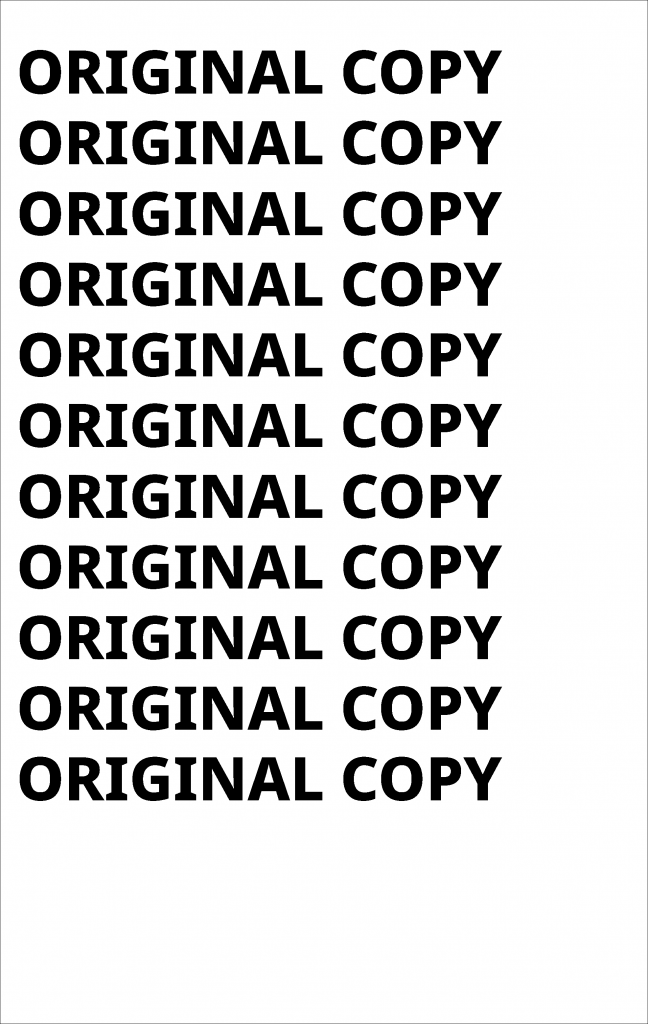
Page 1 Original copy (book name)
Pages 2-3
(showing some text transformed through iteration) Book overview (Machine → Translation → Iteration → Error → New Image)
Page 4 What is a Copy?
Copy is defined as… (Quote, introducing the main text: What is the generally accepted definition of copying?) → (Introduce my definition) Copying is… (Quote an argument).
Pages 5-6 Introduction to laser printers
Pages 7-8 Introduction to scanners, introduction to computers
Page 9 (Question) What will we get if we keep copying with them?
Page 10 Single large image (Later experimental image, answering the previous question through images)
“Reduce text descriptions in the experimental section later”
Pages 11-18 (More pages possible) Scanning and printing experiments
Pages 19-30 (More pages possible) After CMYK is separated
Pages 31-40 Same system, different conditions LPI large and small and no LPI / Images of different complexity / CMYK separation and merging / Different DPI
pages 41-46 Detailed digital archives: Machine traces
pages 47-48 Summary Copying is not neutral; any copying is affected by the operator and the system. “Copy = Original + Machine + System + Operator
Original + Machine + System + Operator + Iteration = new image (This part is tentative and may be modified)”
page49 Appendix Supplementary information: Equipment model, experiment number setting rules, references, experiment procedure index, details: scanning DPI, print settings, LPI, paper in the experiment).
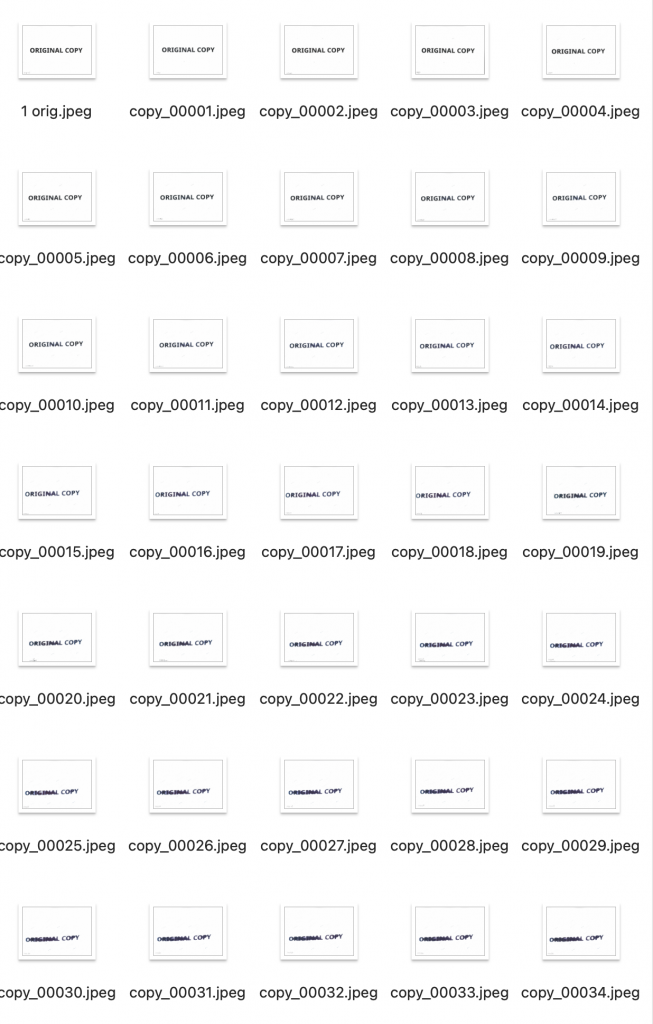
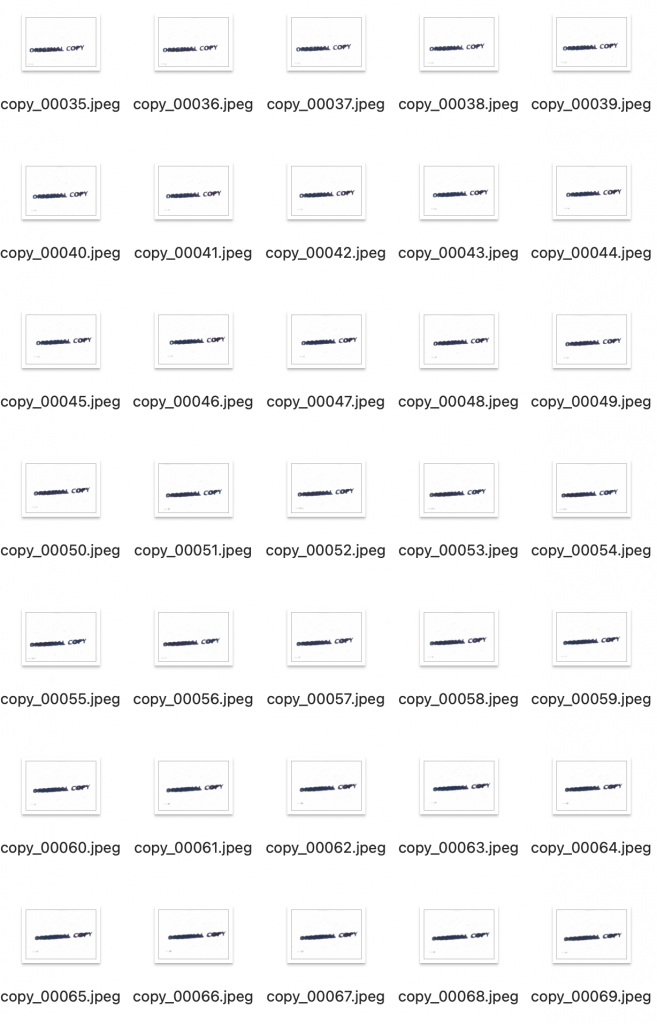
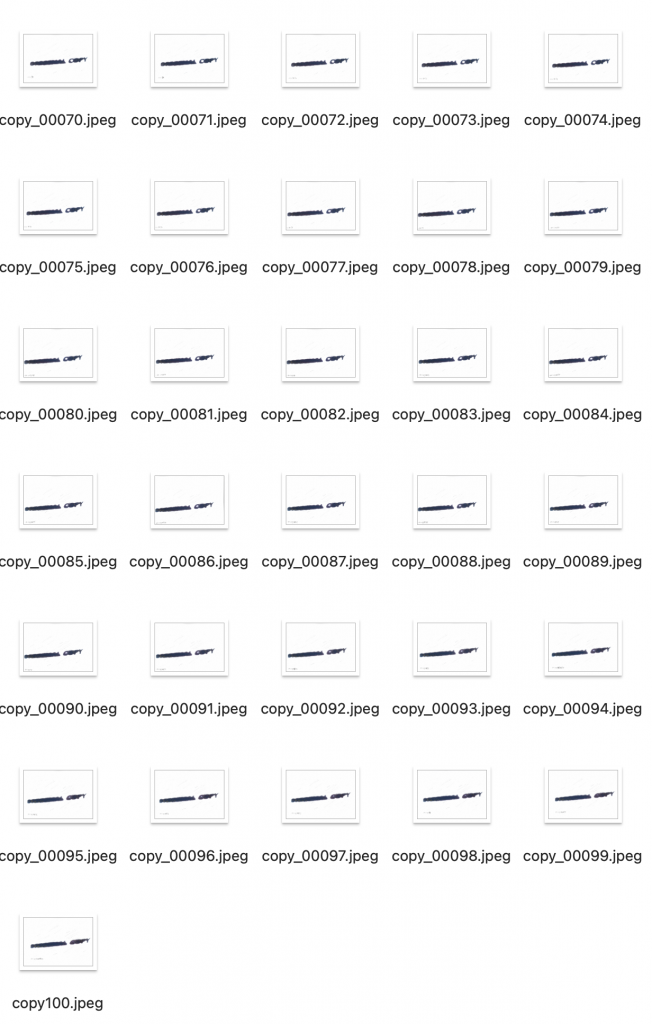
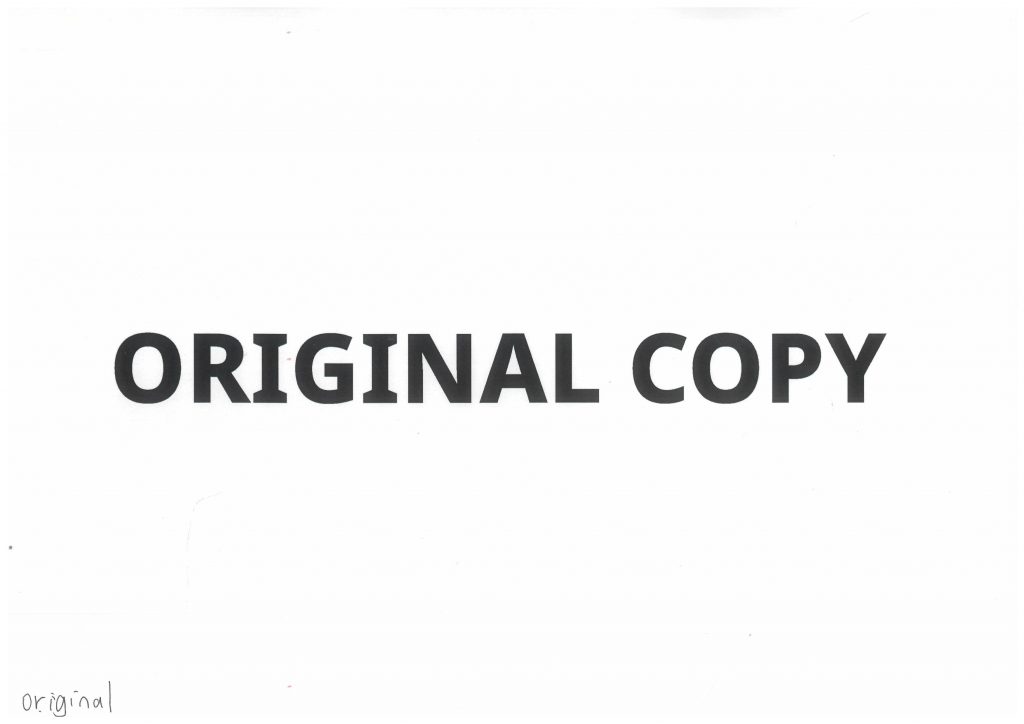
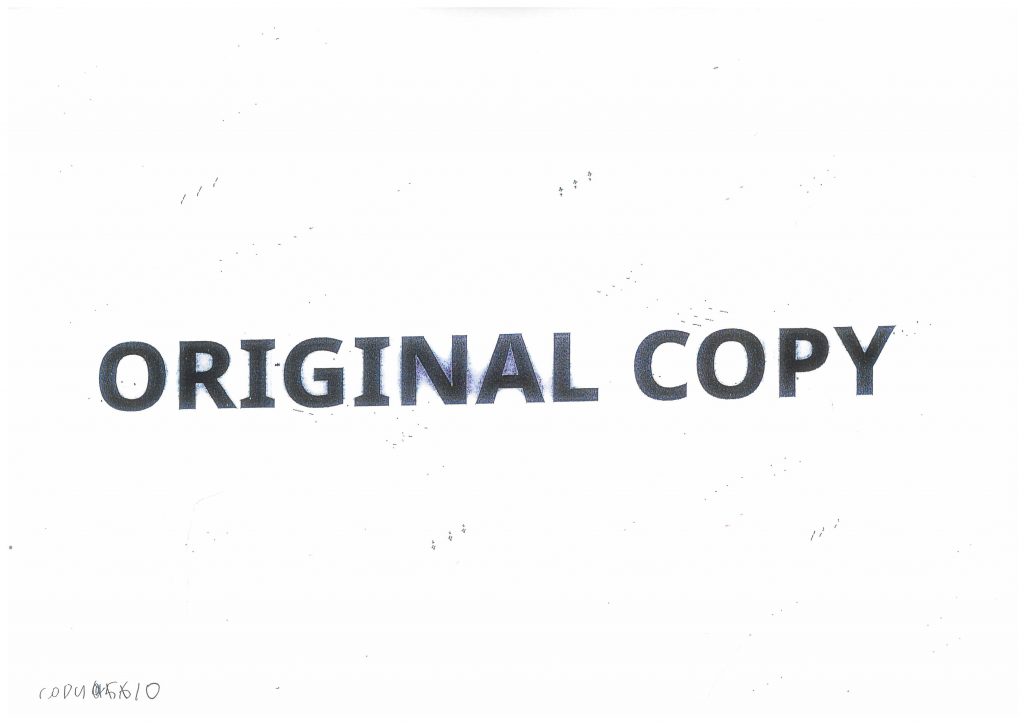
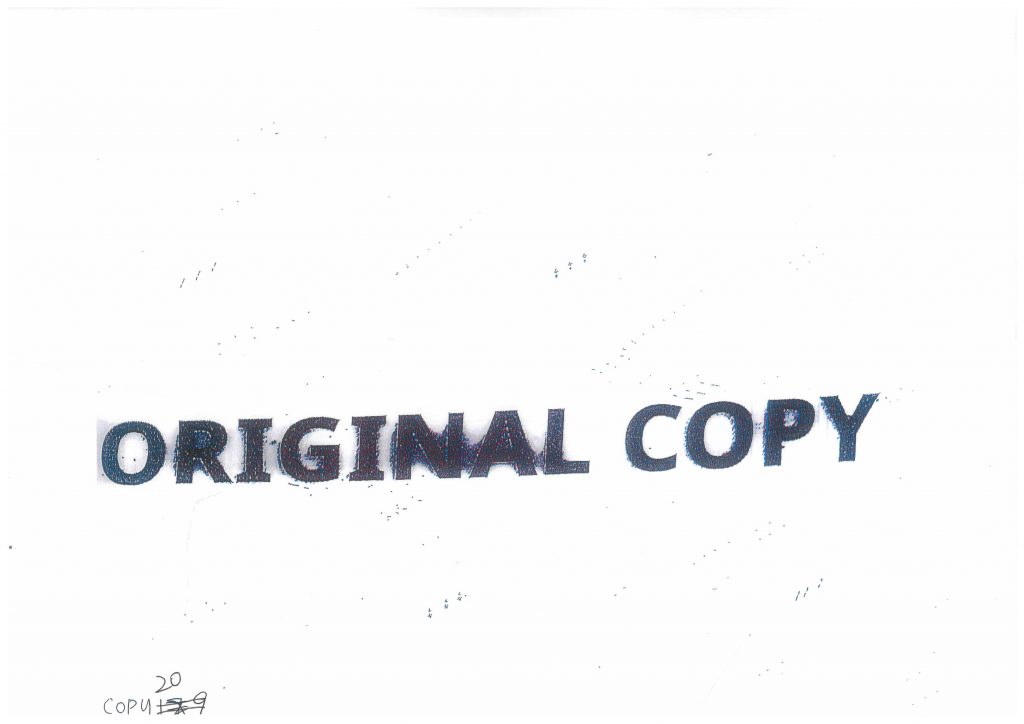
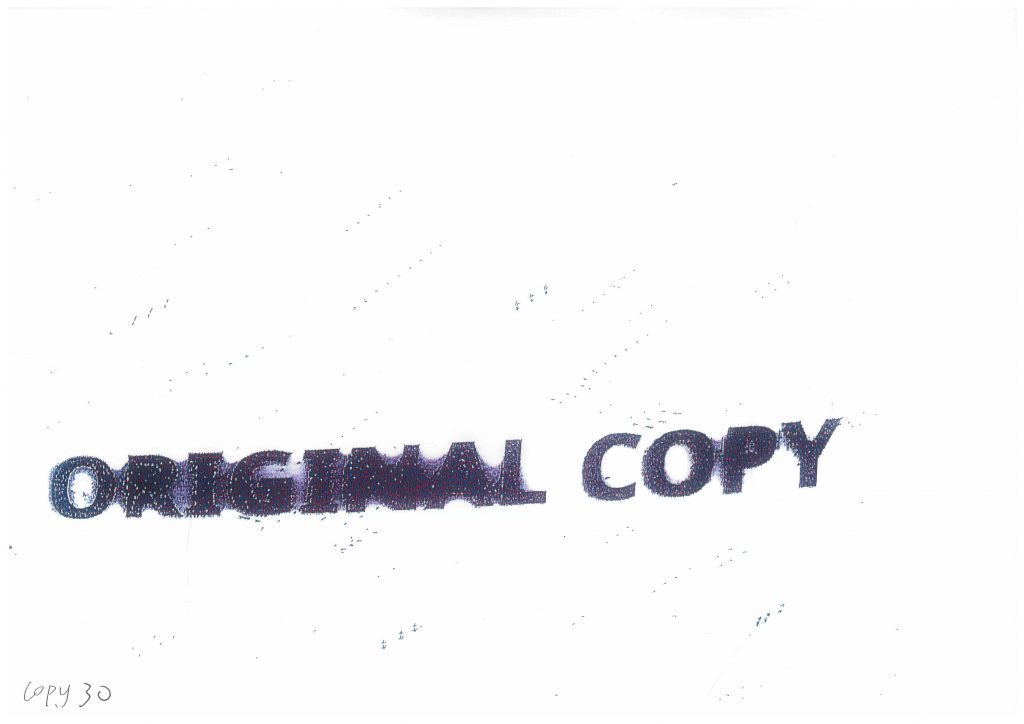
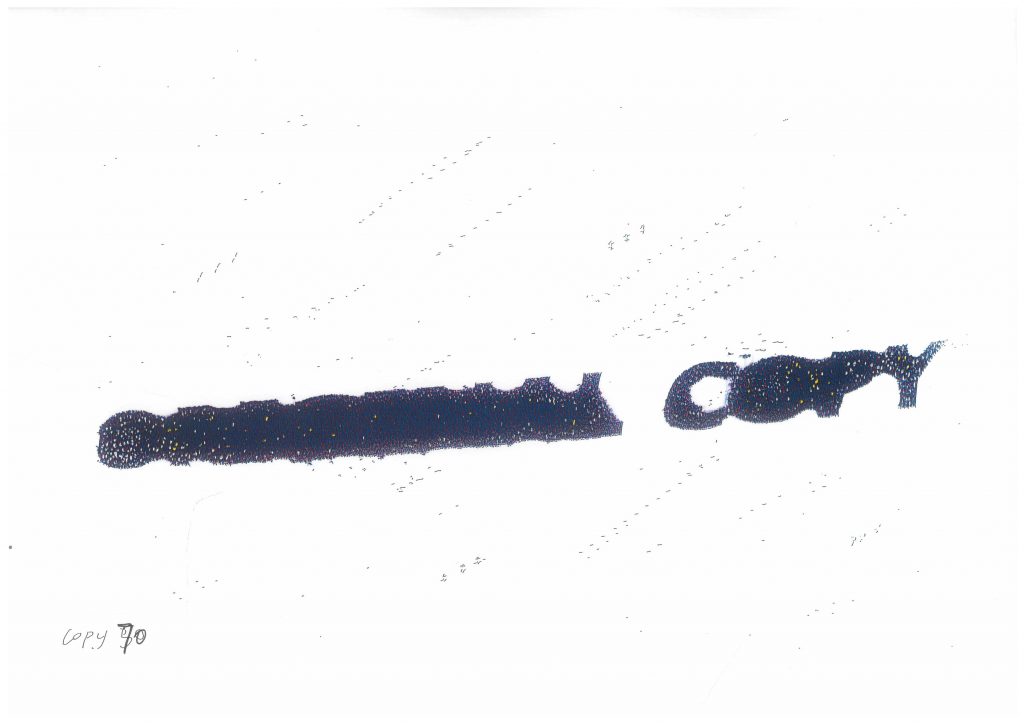
I first designed the layout. Then I iterated on the printing process. Finally, I imported the images into the school administration system according to their positions in the layout.
In planning the book, I intended to showcase the individual iterative changes of the four colors C, M, Y, and K, so I first prepared the image materials for this part. To speed up printing, I used the printer’s copy function. I wanted to use the copy function to iterate everything uniformly before scanning. In the original iteration process, my steps were: scan, save to computer, upload to computer, print. The reason for this was that after planning the book content, I realized that preparing all the necessary images would be extremely time-consuming, and I might not have enough time to complete it. Therefore, I decided to speed up my work in this way. This also unexpectedly led me to discover that the results of copying and scanning are different.
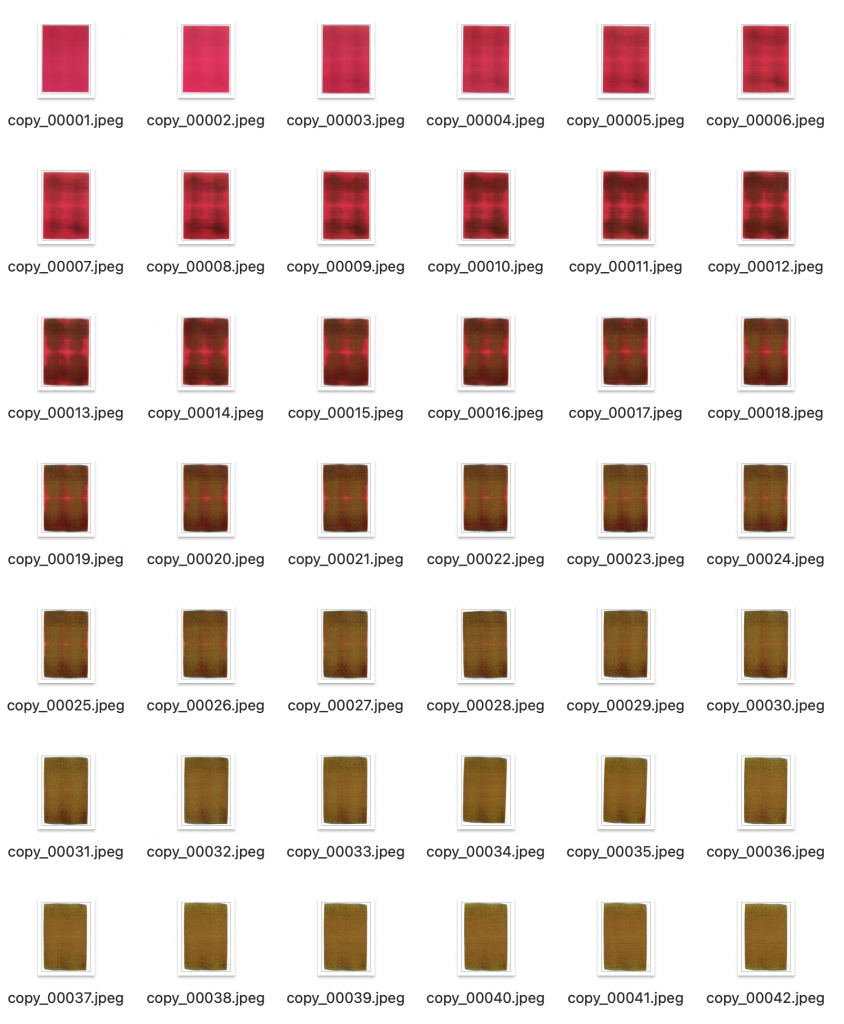
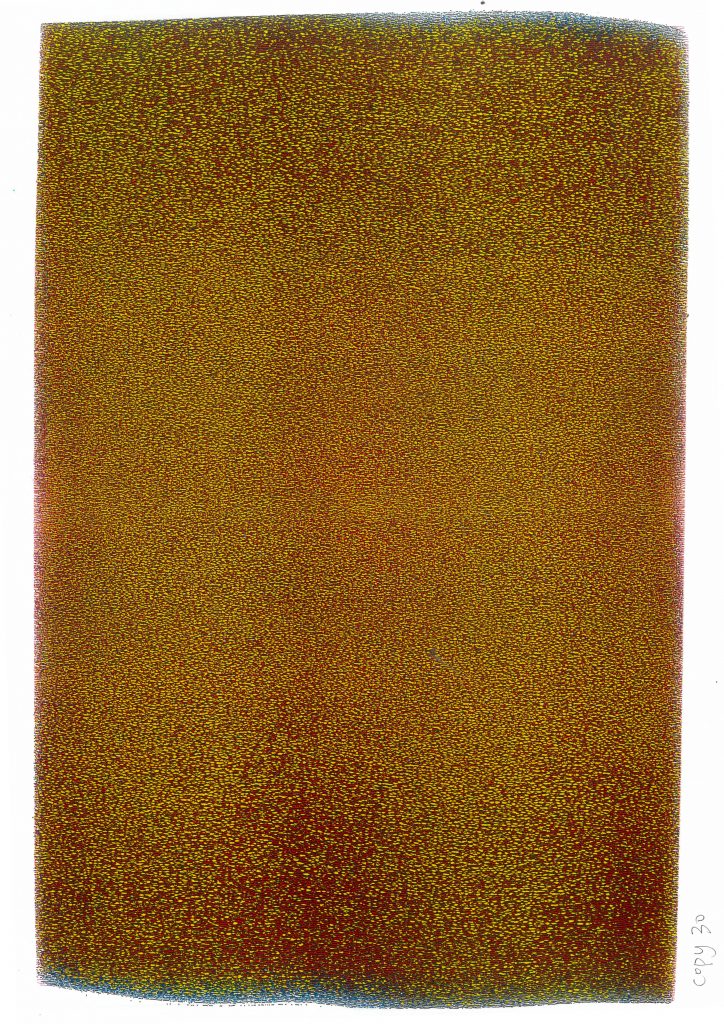
After copying and iterating, the magenta color transformed into an image composed of a mixture of yellow, black, and red dots.
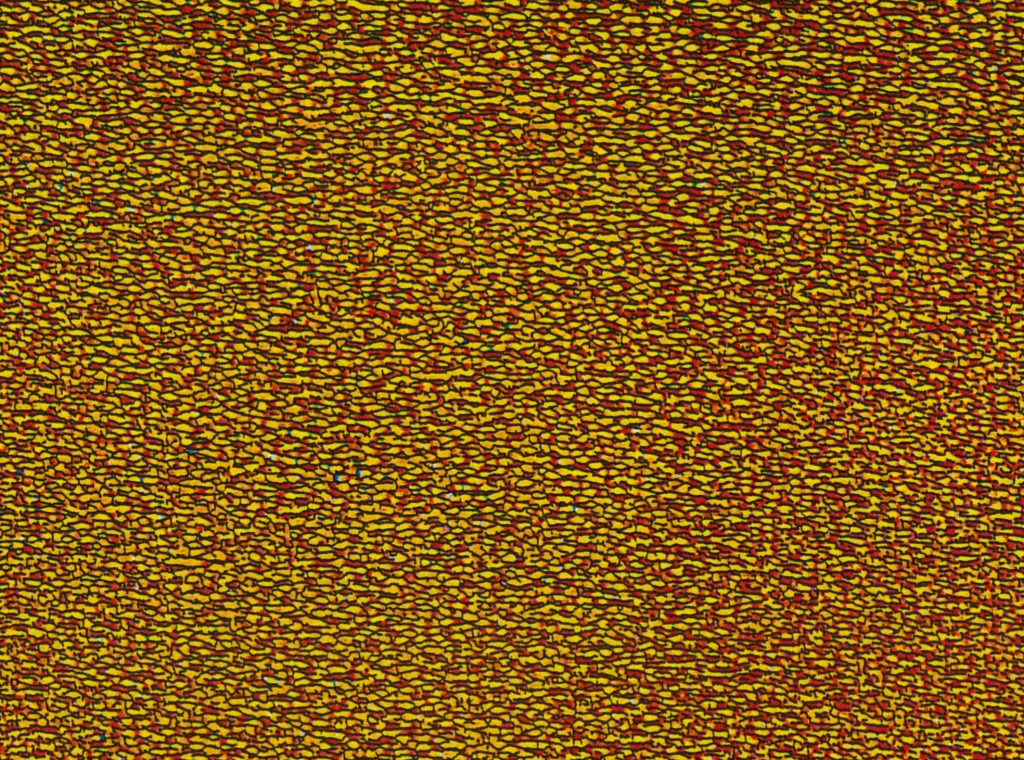
Using the same machine and performing the same “copy” operation, scanning-upload-printing and copying yielded different results.
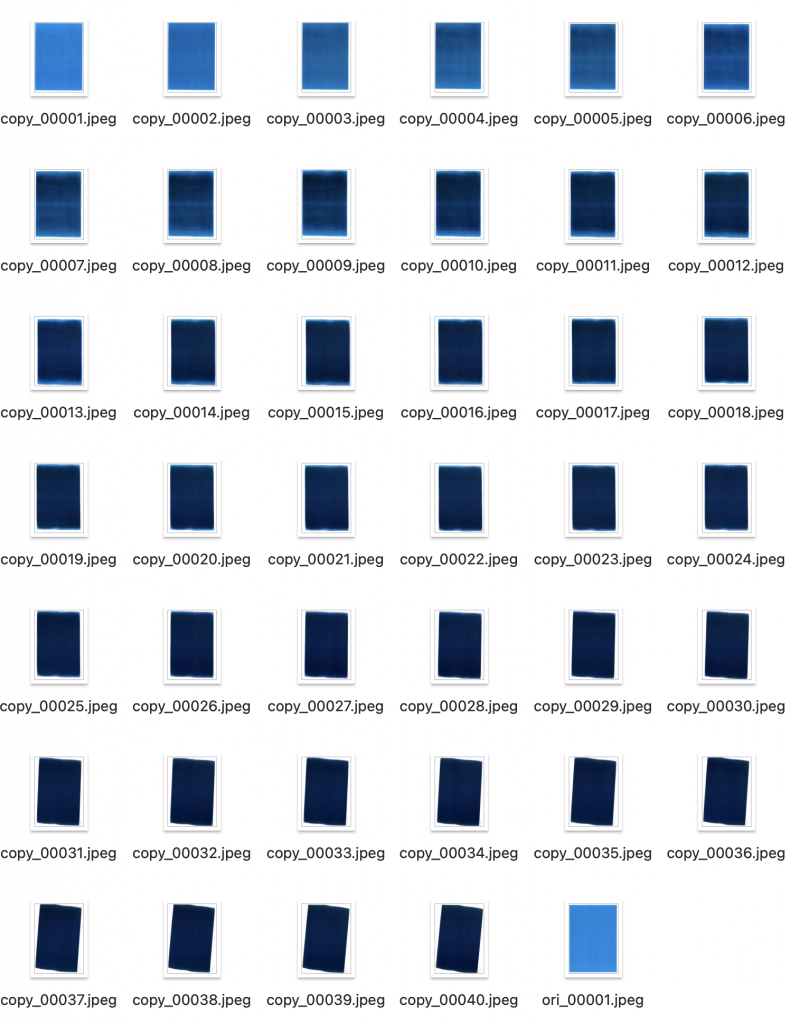
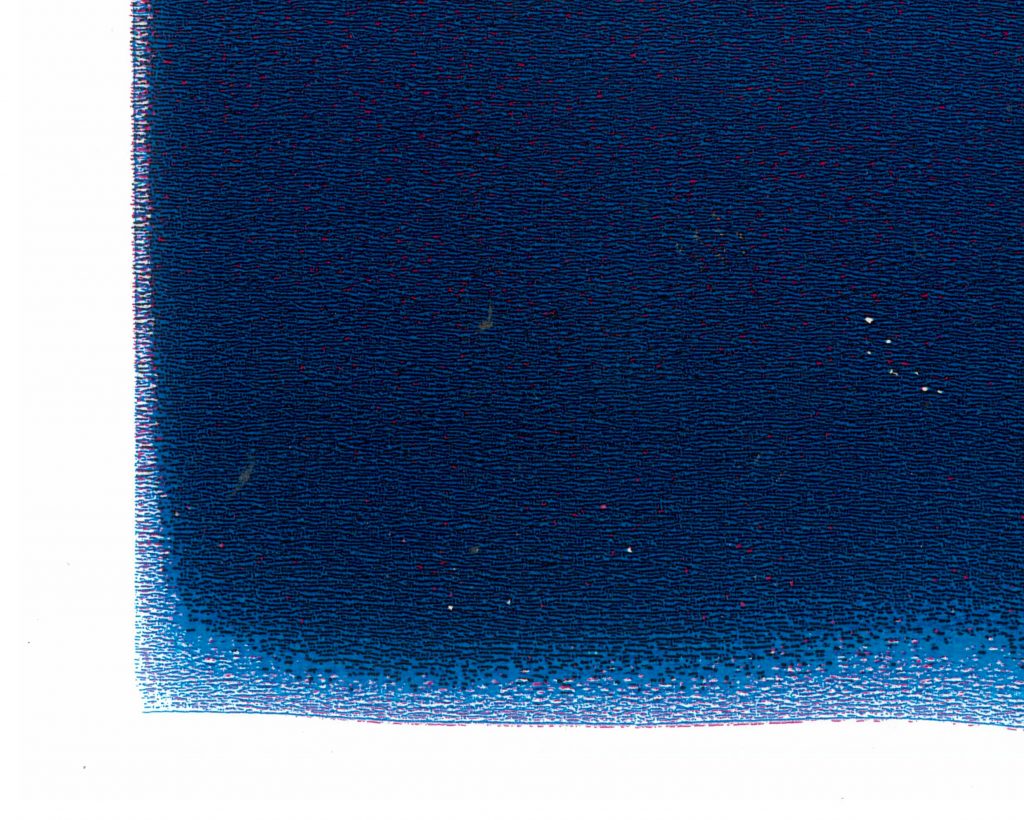
The blue color also exhibits a mesh-like pattern. But what’s amazing is that these patterns stop changing after a certain number of iterations.
The changes when using three colors are basically the same as those when using one color.
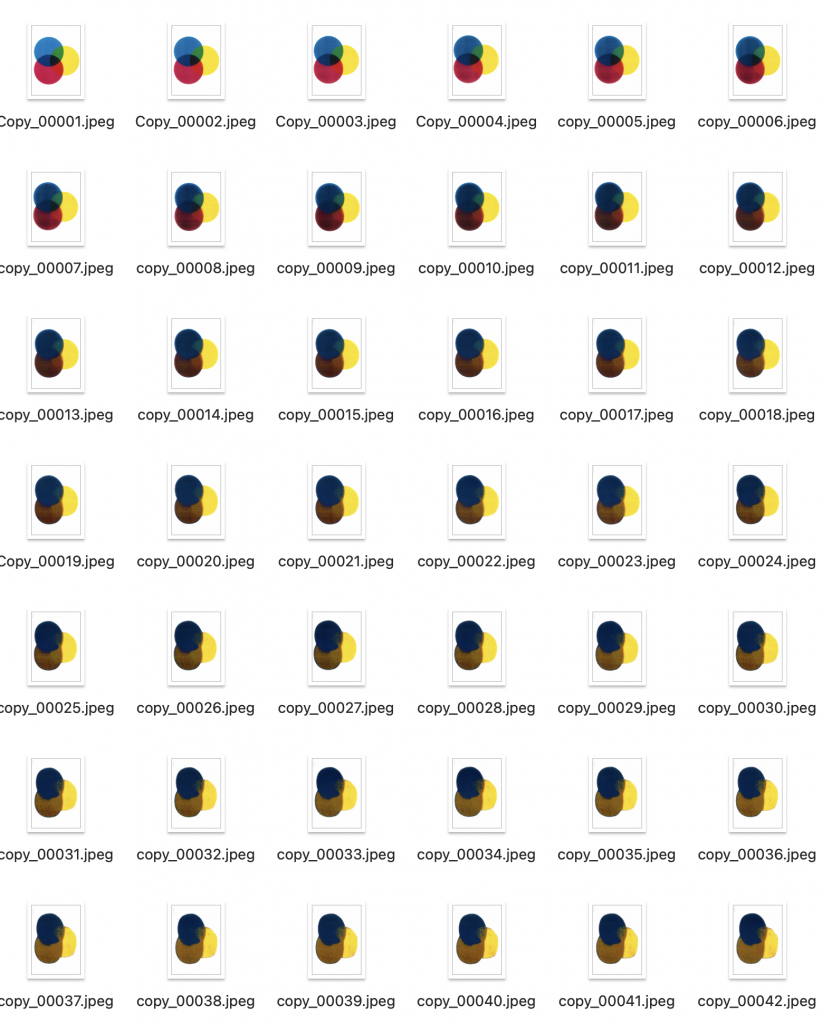
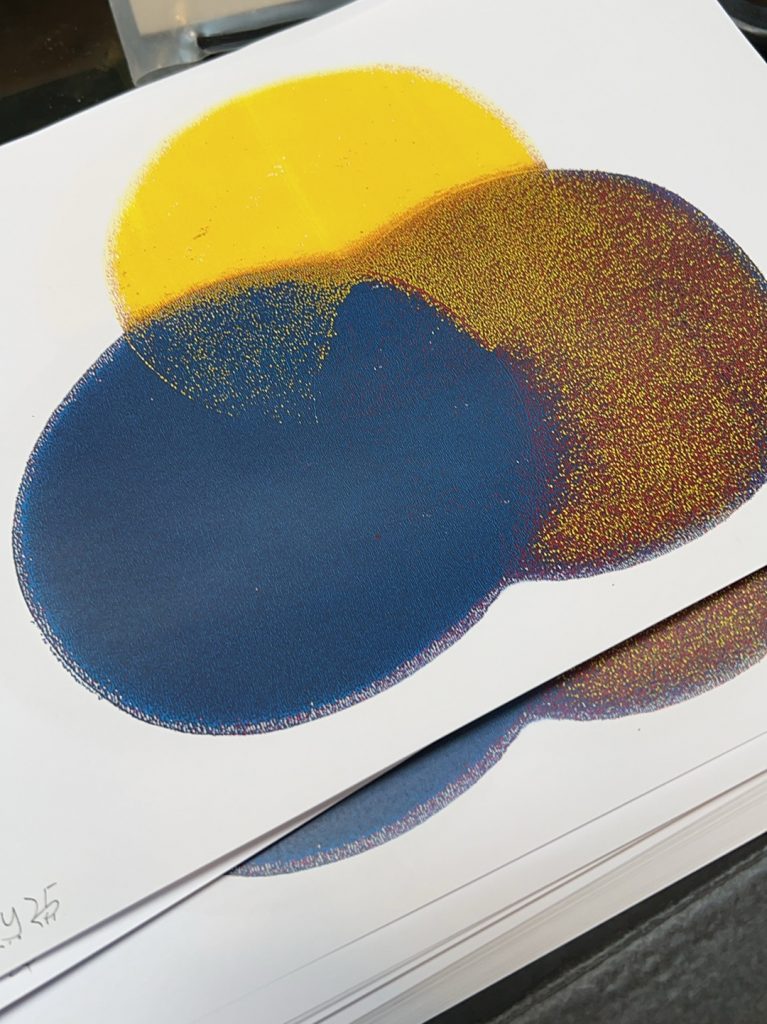
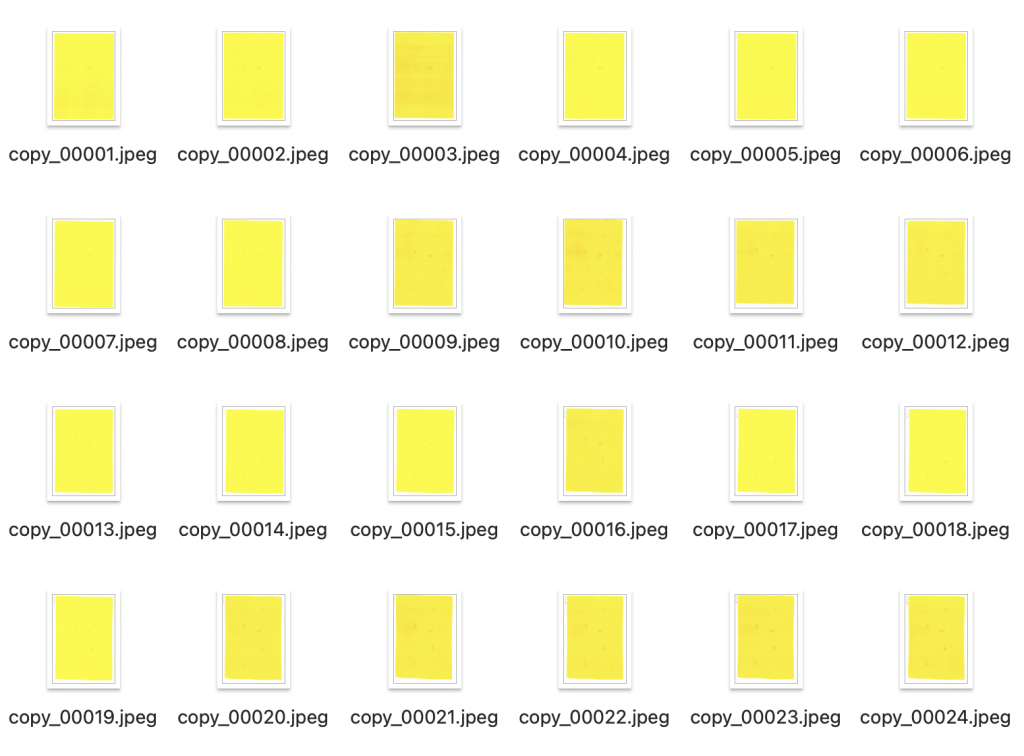
In the Copy iteration mode, the yellow color remains unchanged.
Feedback
Since this transformation process is also quite visually striking, we can consider showing this part separately. A detailed explanation in a book will be produced later.The tutor shared this binding as a reference.
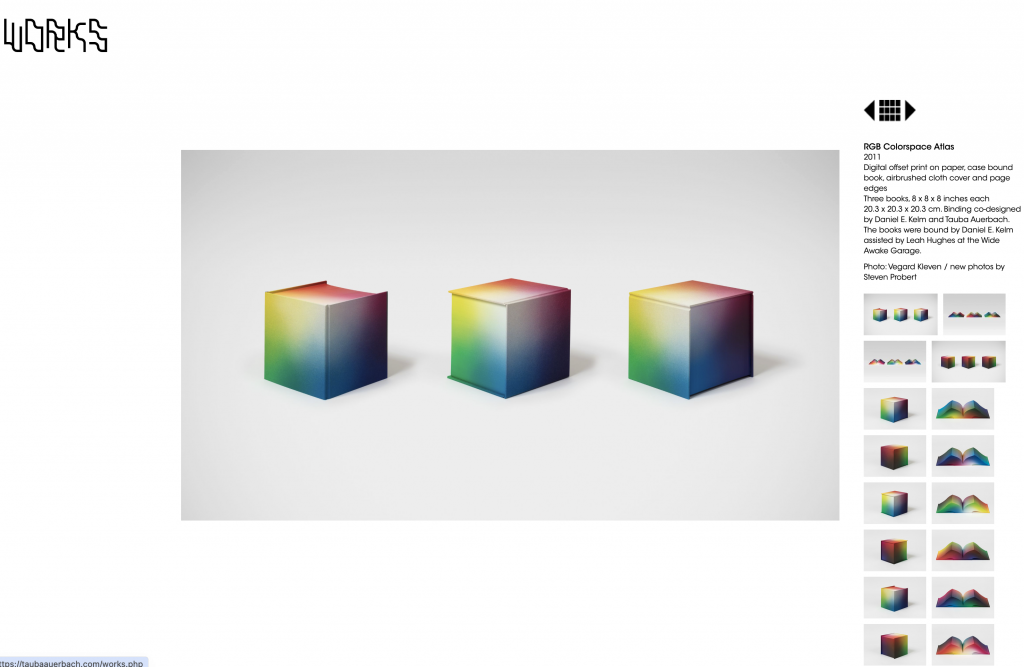
Tauba Auerbach, RGB Colorspace Atlas, 2011 (Auerbach, 2011).
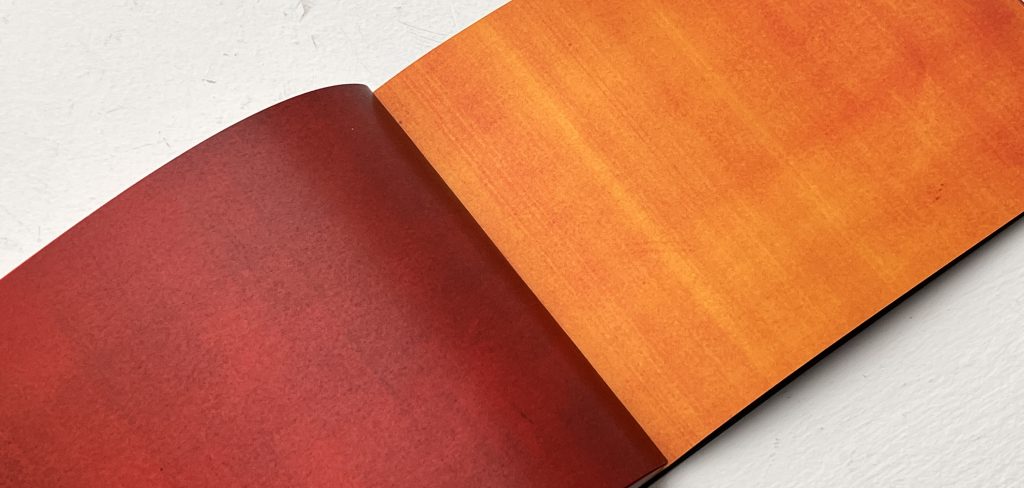
Week3
In the third week, I repeated the experiment I had planned for the second week. The results were quite surprising: regardless of the color, after 30 iterations, they all turned cyan. The cyan color, however, remained unchanged.
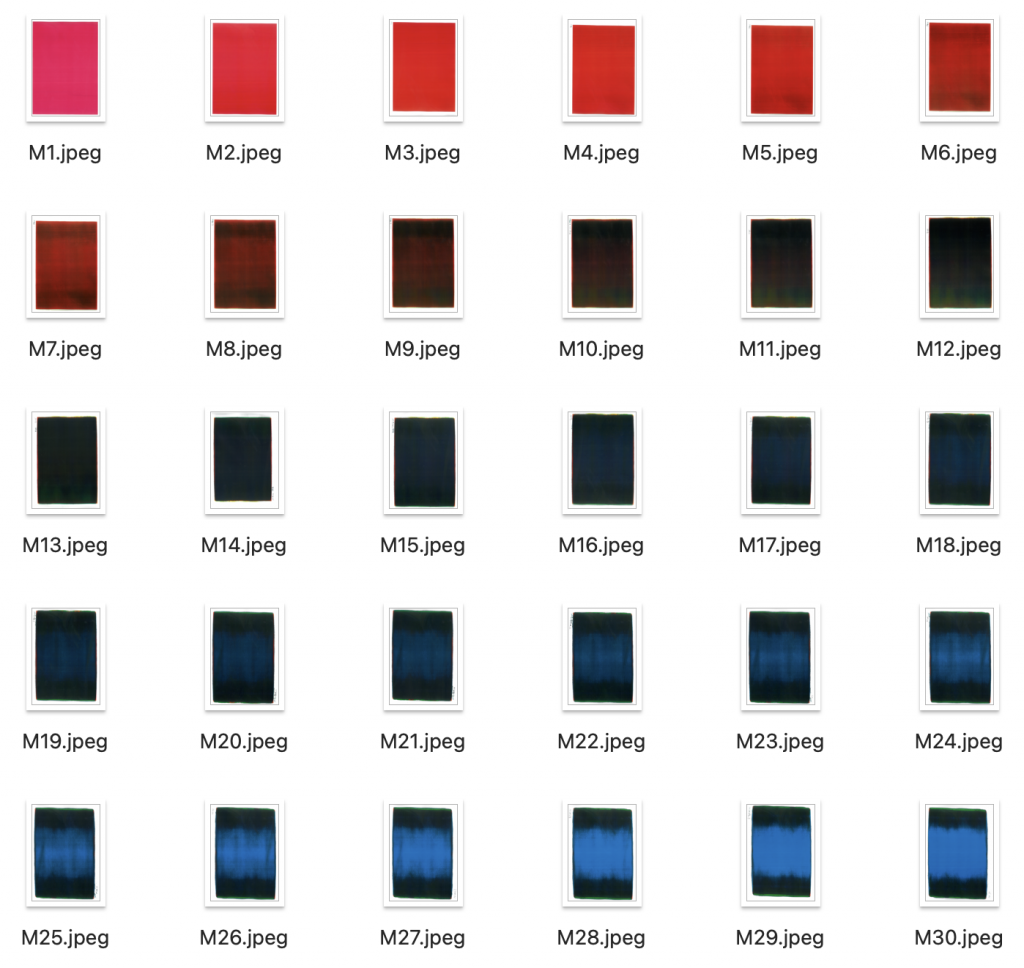
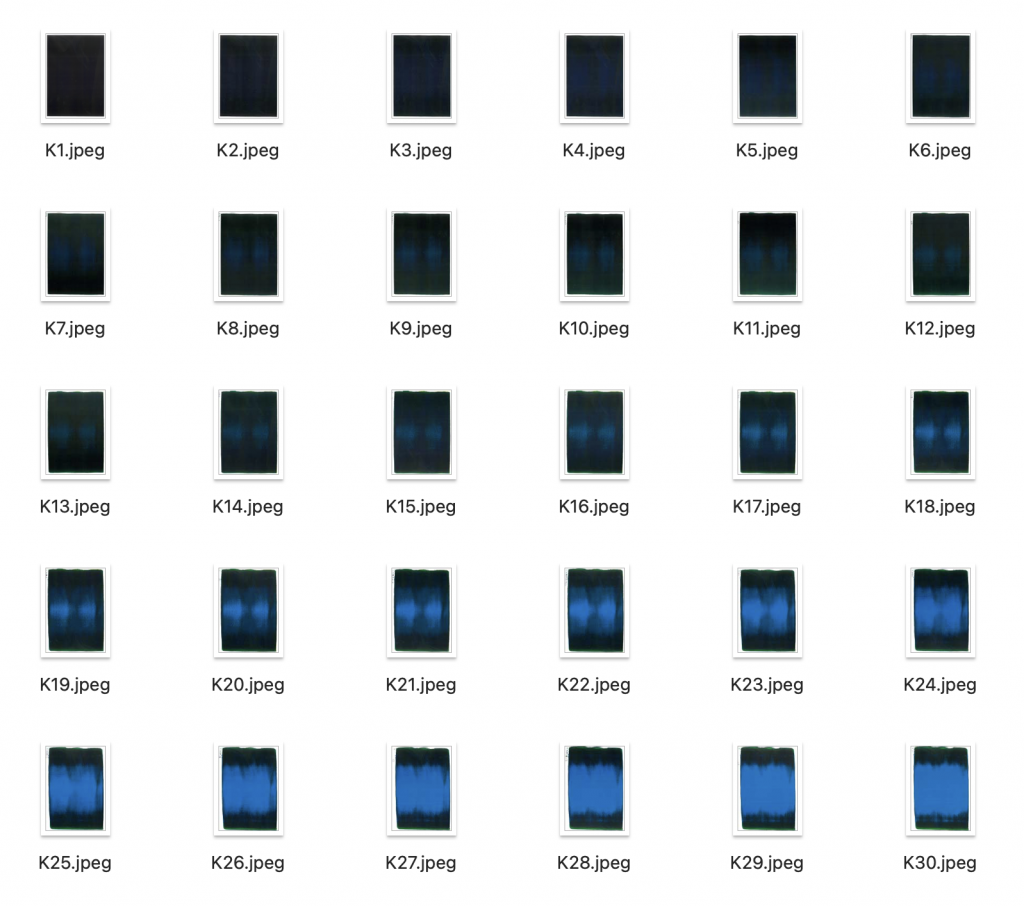
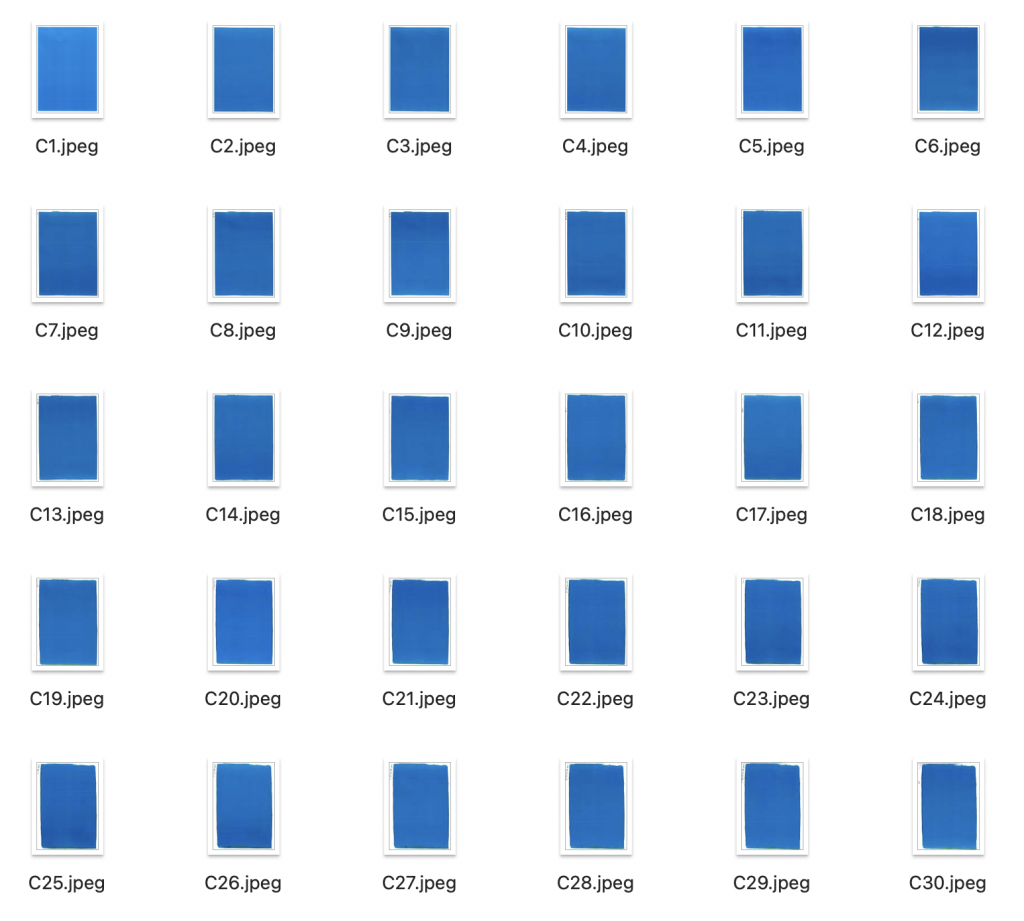
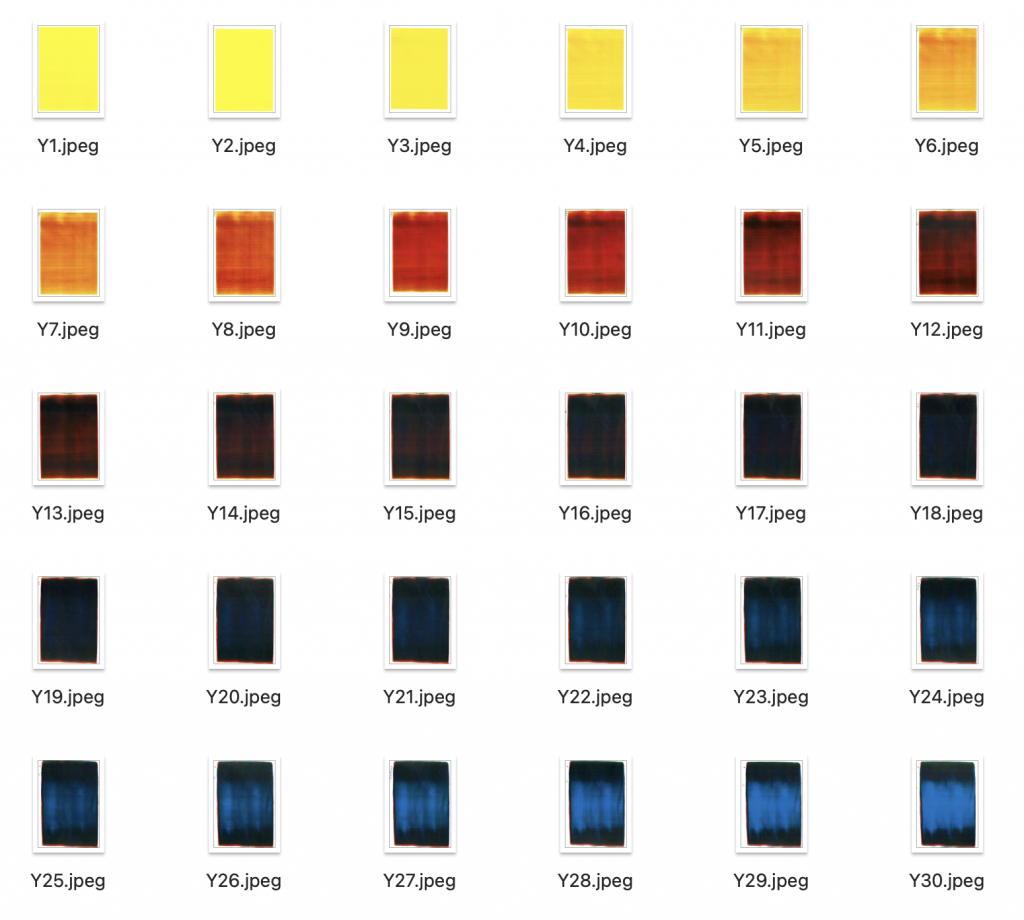
This result differs from my experiment in Positions through iterating. Noticeably, in the same Scan- upload-Print experiment, after 24 iterations, yellow remained in a red state. I speculate that the colors influence each other. Adding a color might make it more stable or prolong its duration. My plan in the next experiment is to combine two colors together as input for iteration, testing the rate of change.
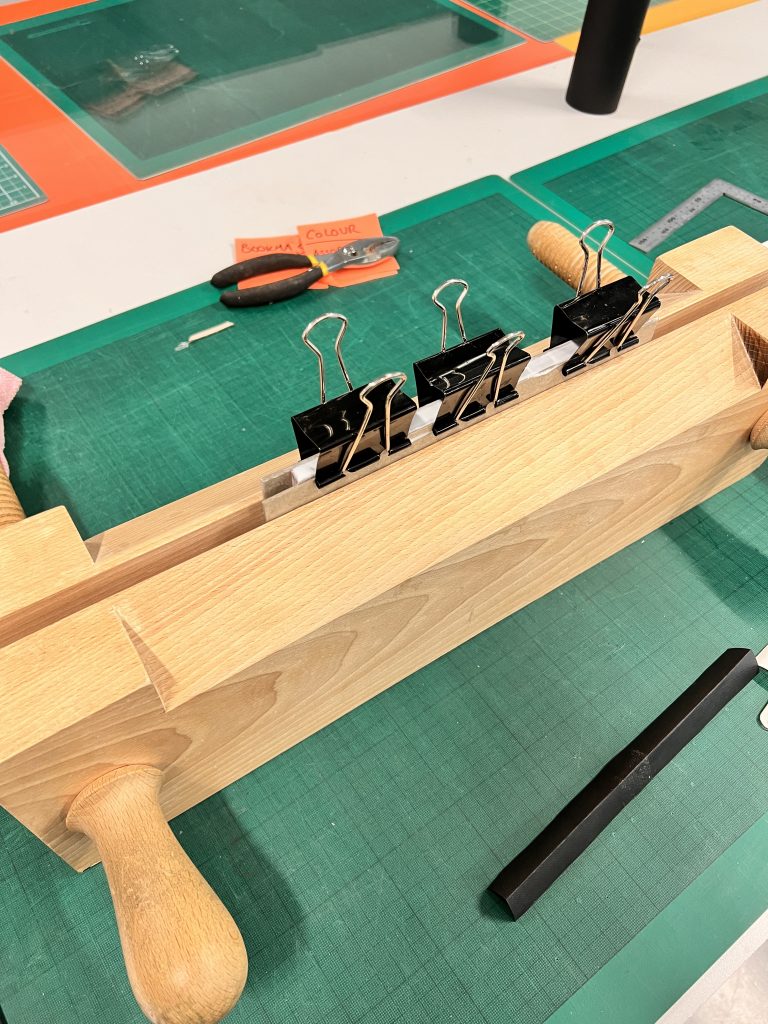
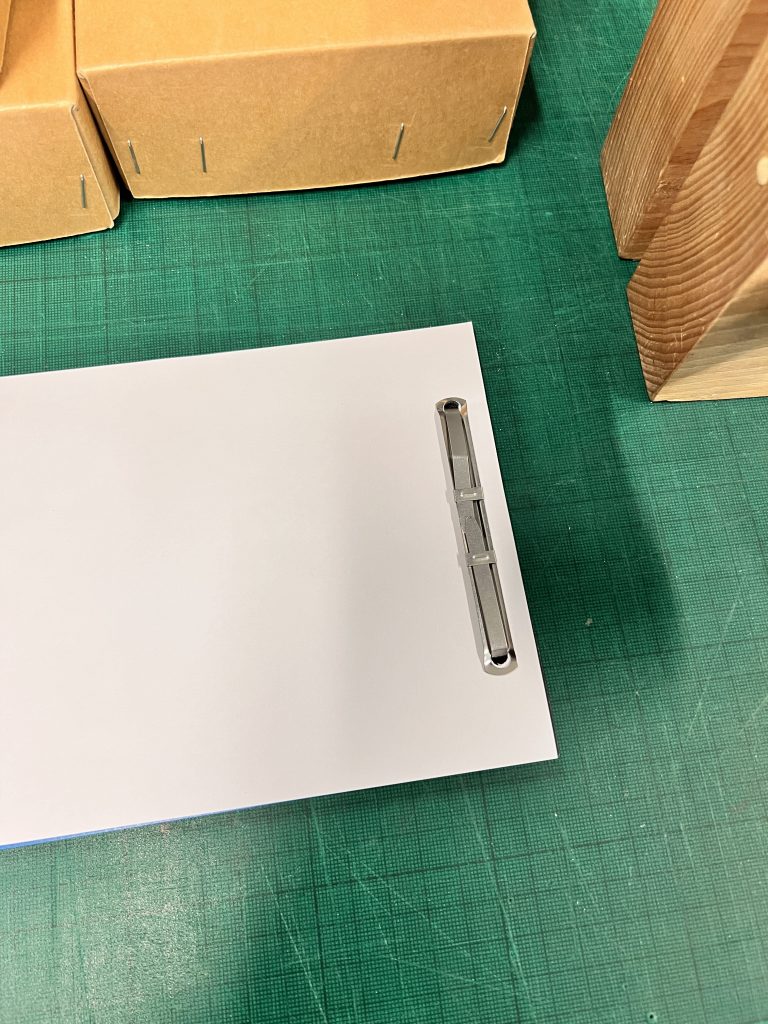
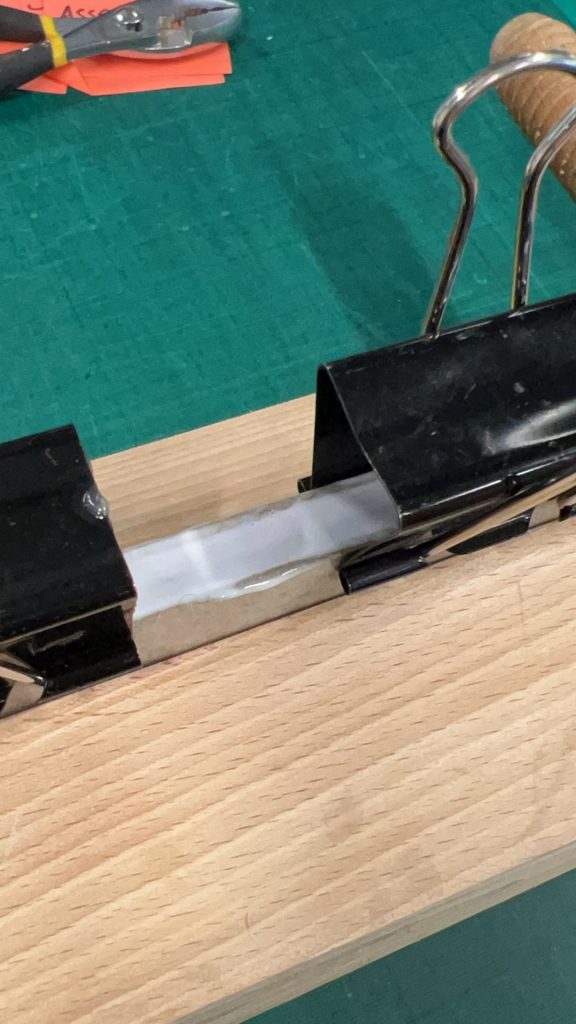
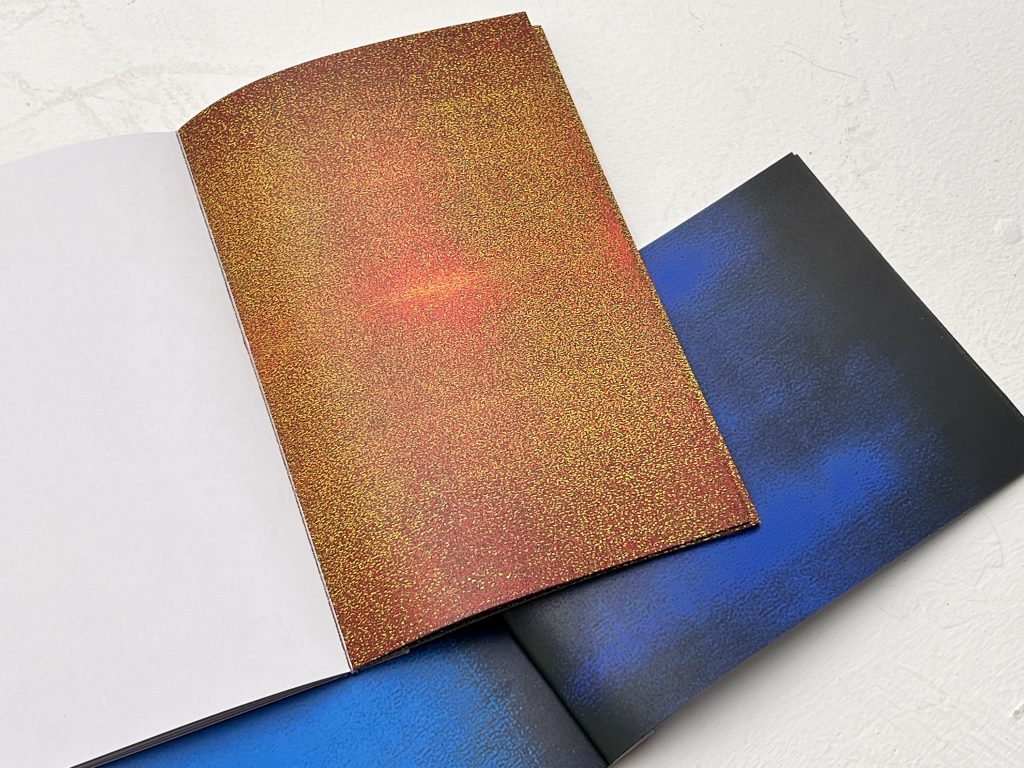
The final product of this project will be bound into a book. Readers can observe the color iterations by flipping through the pages.
Self-reflection
This is a book shared by the studio teacher, made by a student from another grade.
She also used a printer to iterate the image, and I think this presentation method allows for a clearer observation of the overall changes in the image. If the project were presented as a book, I think this style of using white space around the edges could be a good reference.
Feedback
My advisor suggested I use a flowchart on the cover to explain the changes in the images. But this made me think. Should I aim to reveal the system’s inherent characteristics, or to generate new characteristics through interaction with the system?
Week4
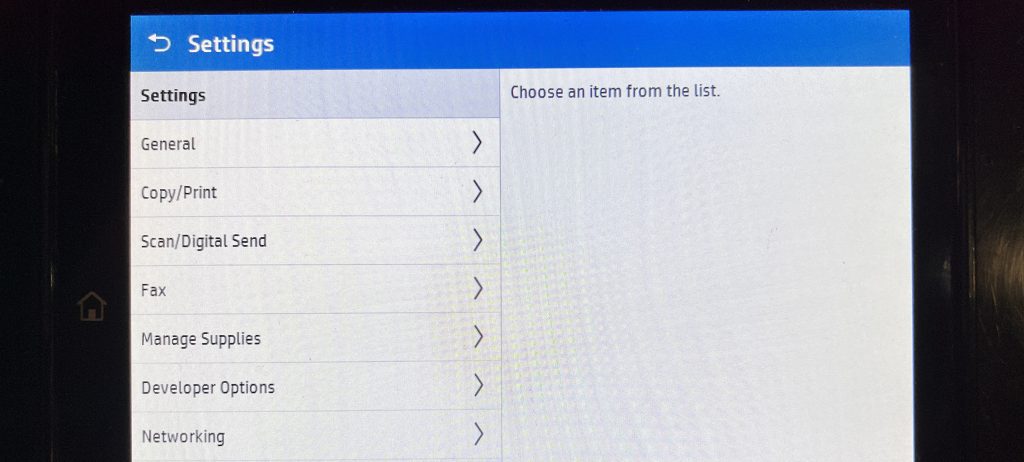
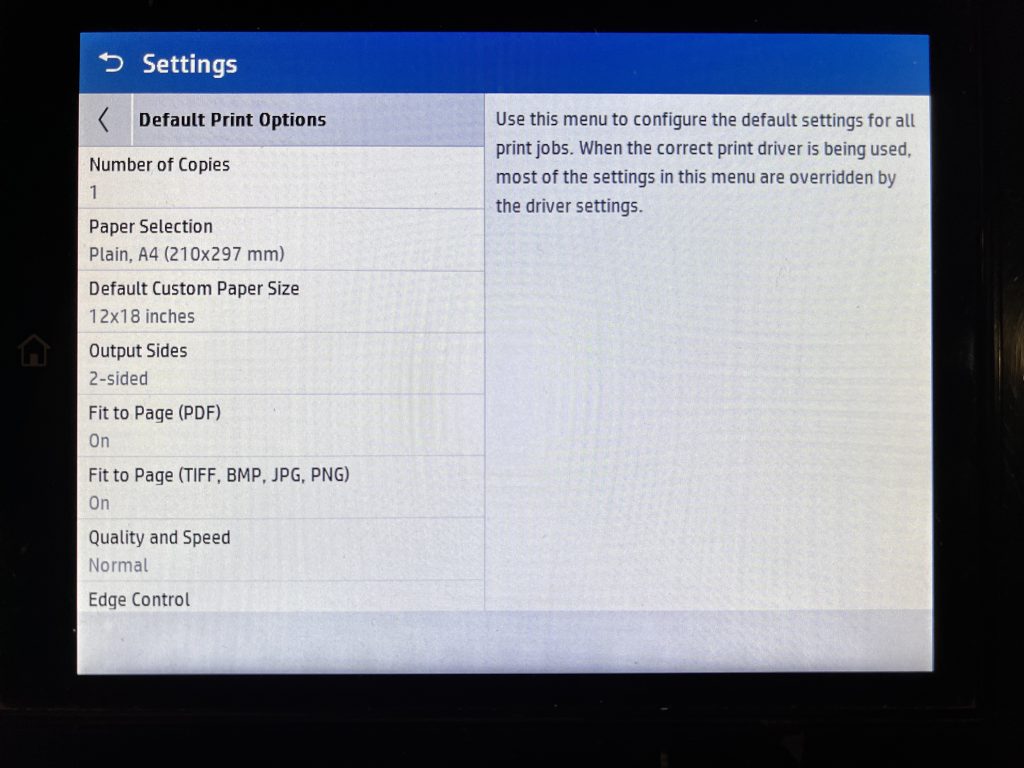
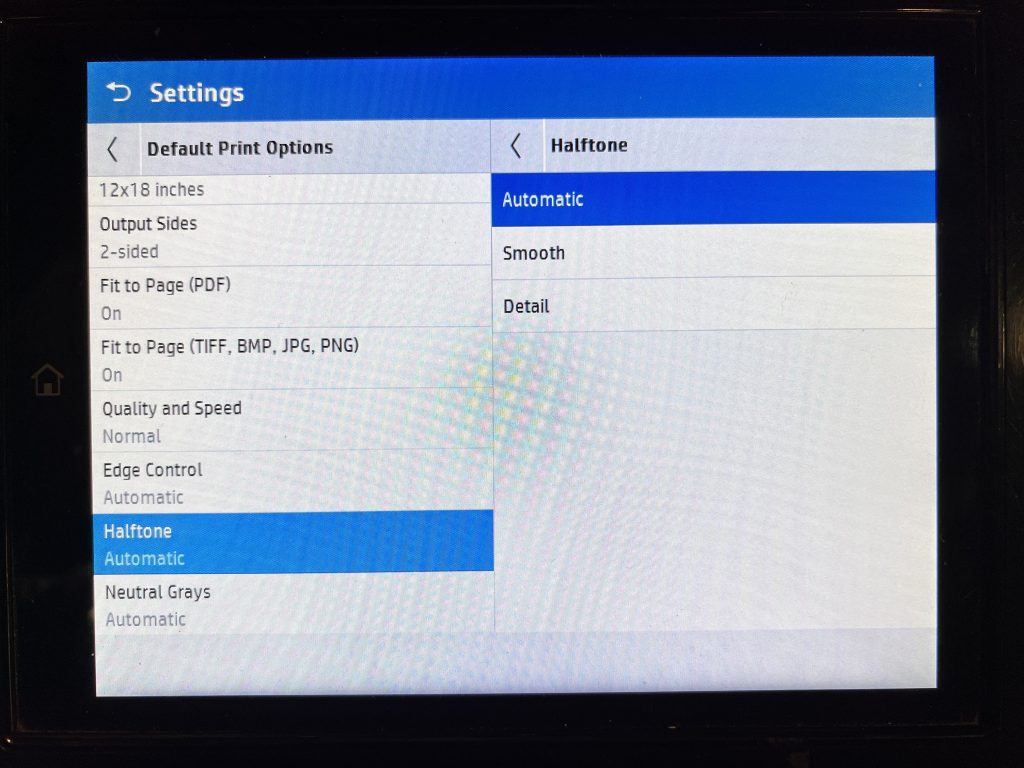
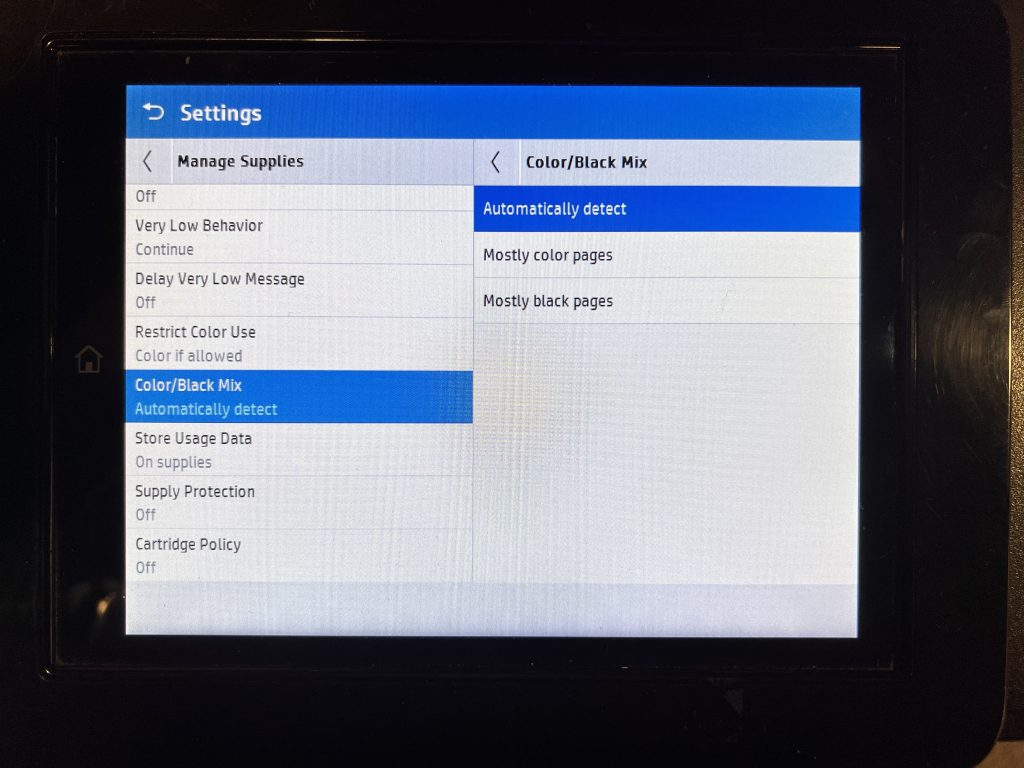
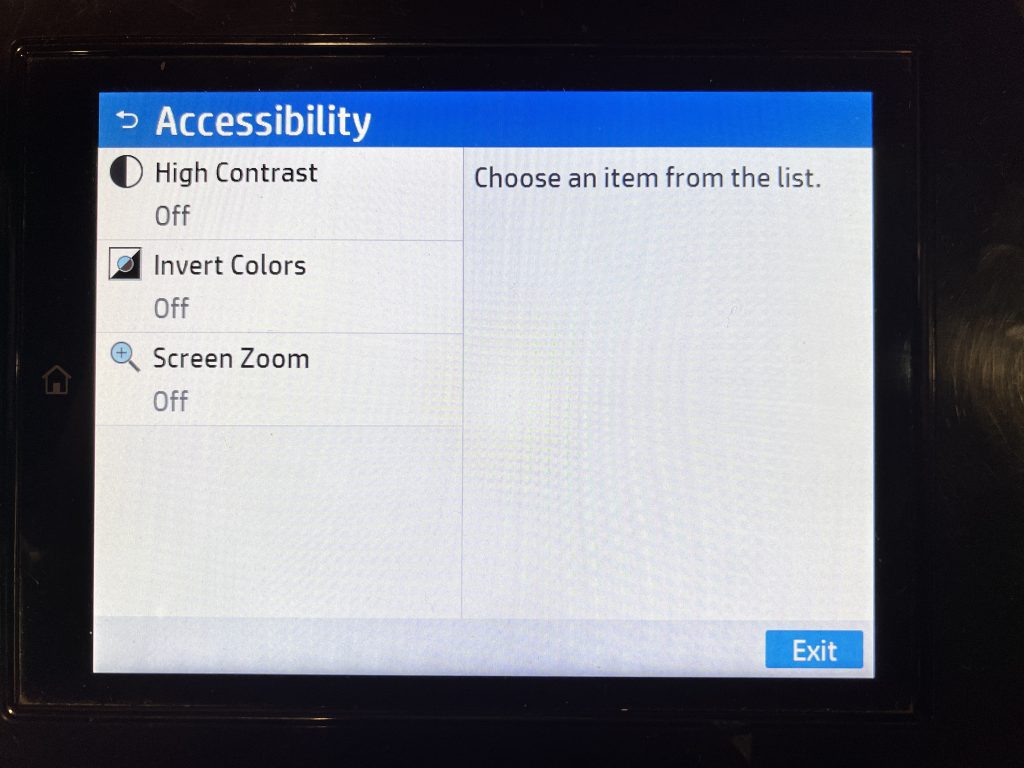
After reviewing relevant literature and careful consideration, I re-examined the printer and found that it does indeed have internal color adjustment settings. However, these settings are more general and do not allow for precise numerical adjustments. Even so, this demonstrates the limitations of my earlier understanding.
I initially believed my research was revealing the characteristics of the system. However, Lisa Gitelman’s Always Already New: Media, History, and the Data of Culture made me reconsider whether my experimental results stemmed from manufacturer settings or from the uniform, mechanical outcomes of today’s society, arising from the natural, iterative progression of history.